The realm of Dutch and Flemish genre prints is that of etching. The technique transforms the representation of the world into a graphic polyphony in which trees, farm animals, ripened harvests, and rural figures are placed on an equal plane of visual dignity. Despite poverty and deprivation, these scenes are not governed by moralising intent: they convey an affirmative vital force.
While many of these sheets were produced during the Thirty Years’ War (1618–1648), they remain distant, for example, from the world of Callot (1592–1635), despite their contemporaneity.
This efflorescence accompanies both the refinement of etching as a medium distinct from engraving and the experiments of an early generation of printmakers active at the turn of the seventeenth century: Willem Pietersz Buytewech (1591–1624), Gerrit Bleker (1592–1656), Jan II van de Velde (1593–1641), Lucas van Uden (1595–1672), and Simon de Vlieger (1601–1653). These artists establish a pictorial language in the early seventeenth century, later extended by masters such as Adriaen van Ostade and his pupil Cornelis Bega, as well as Jan Ruijscher, Paulus Potter, and Jacob van Ruisdael, who expand its possibilities toward its fullest articulation.
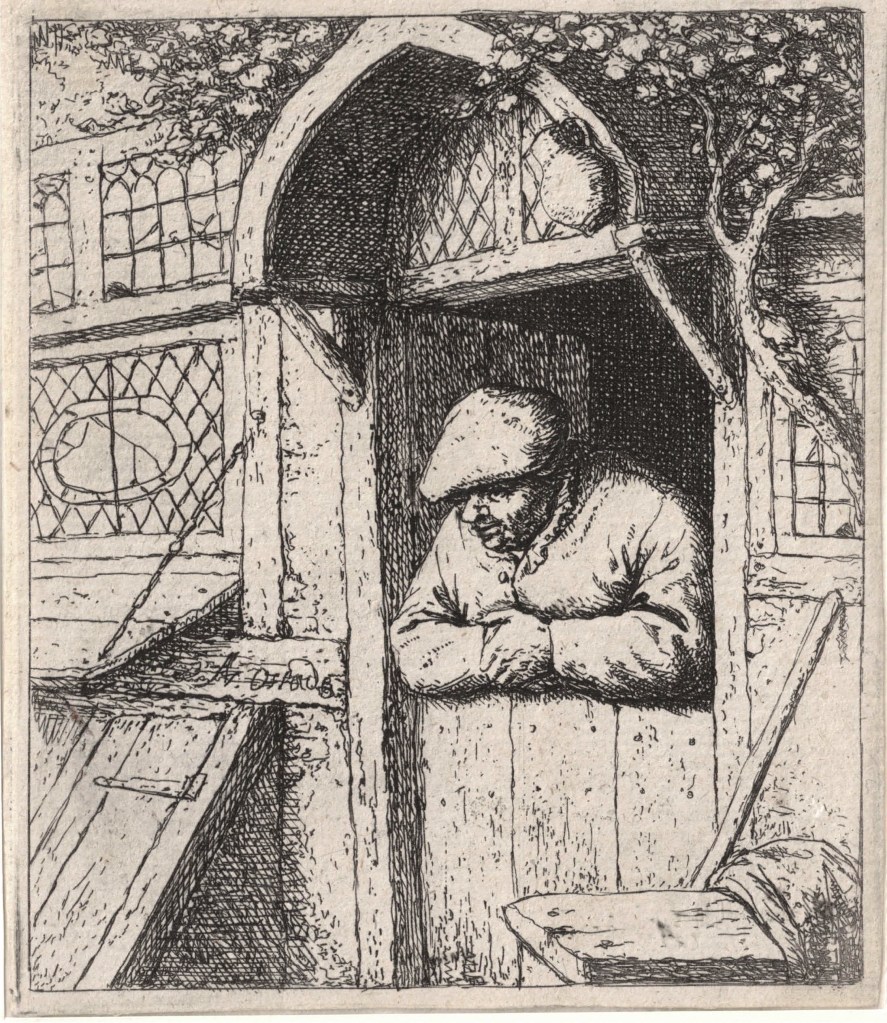
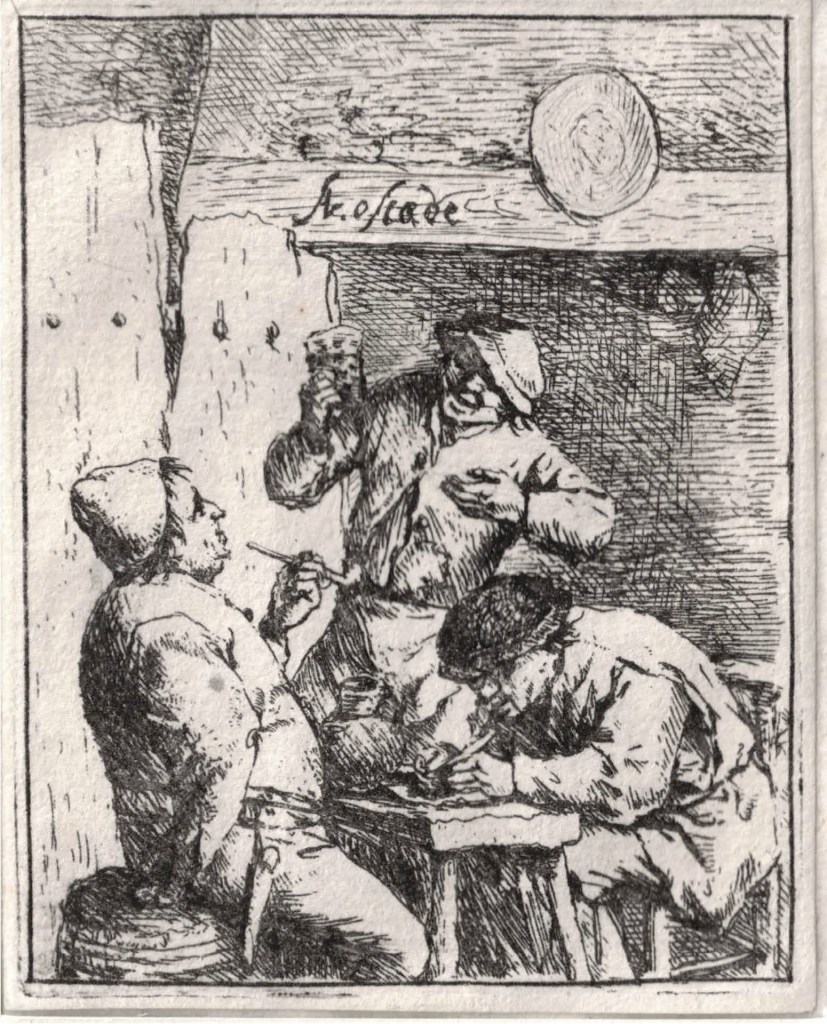
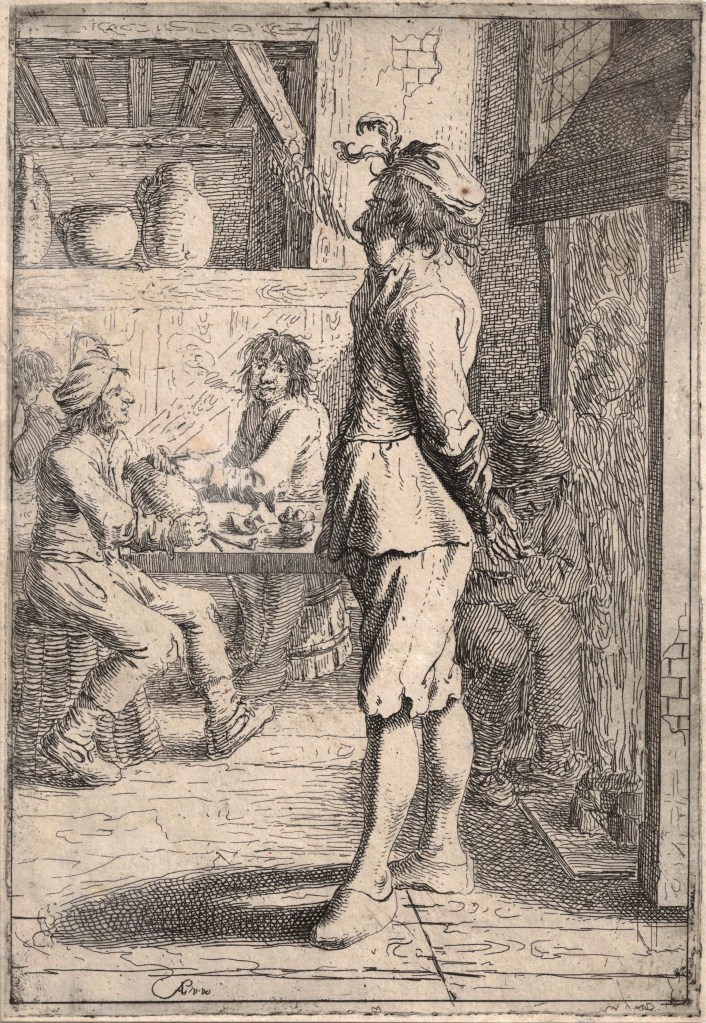
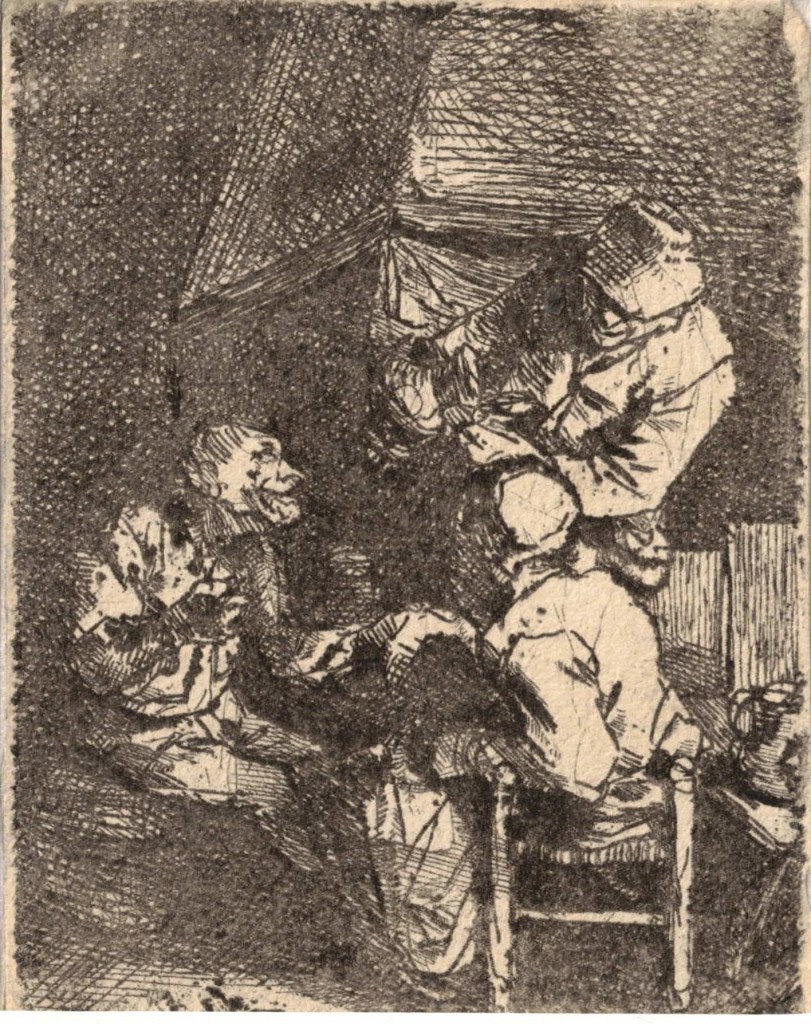
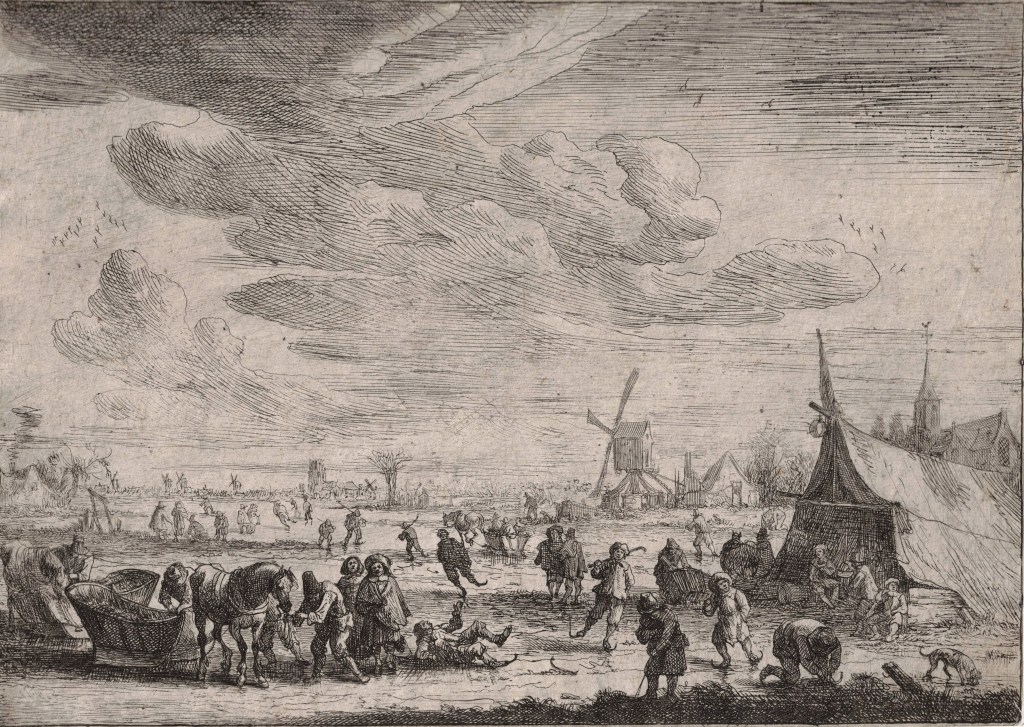
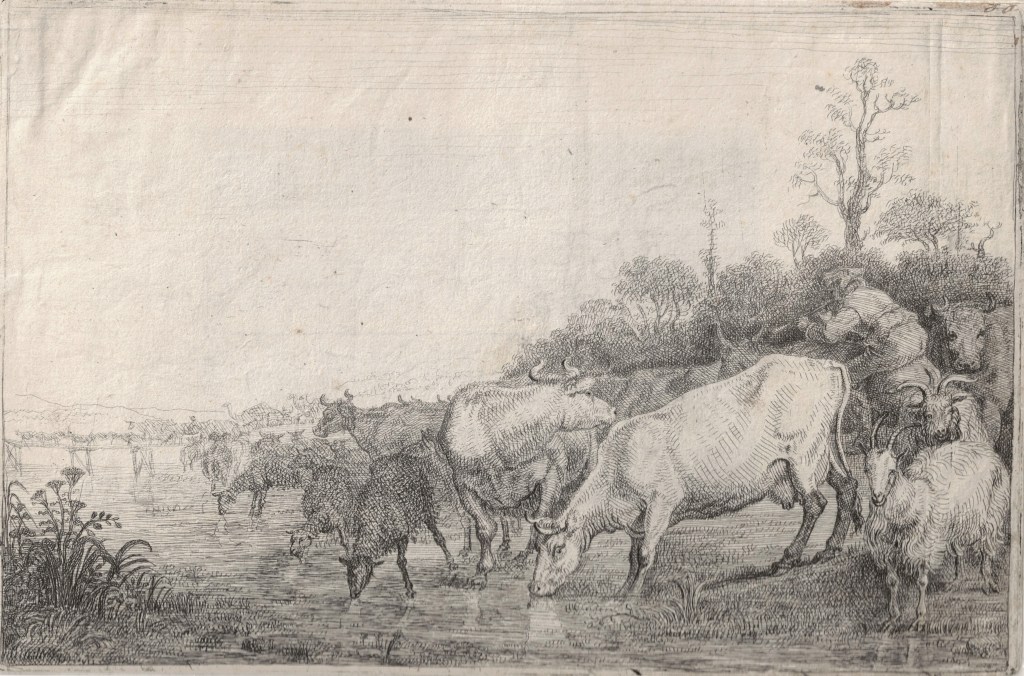
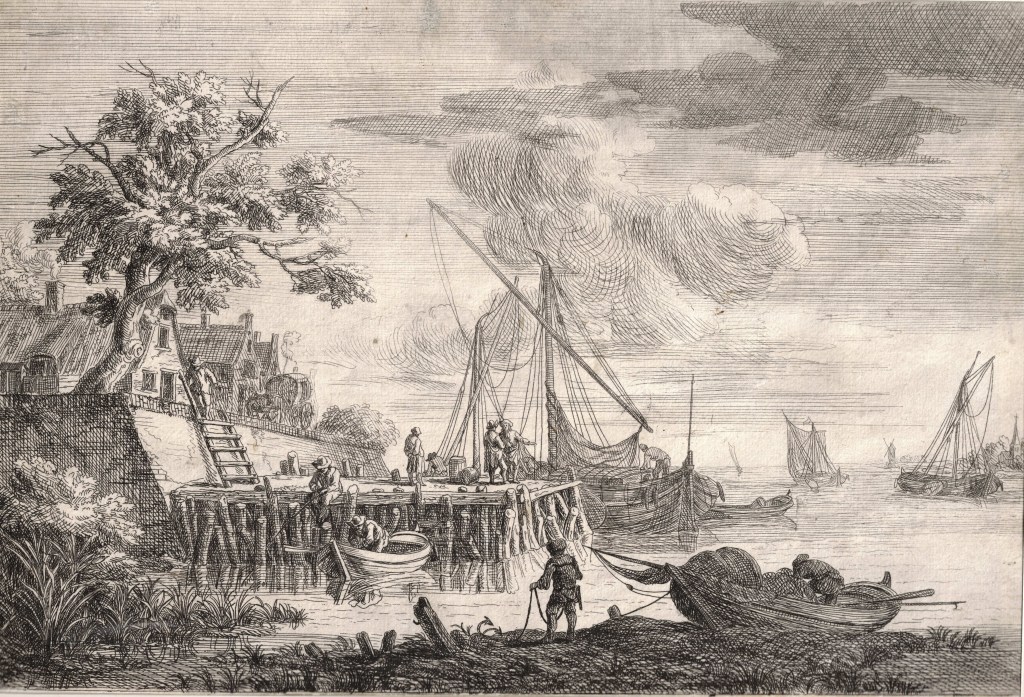
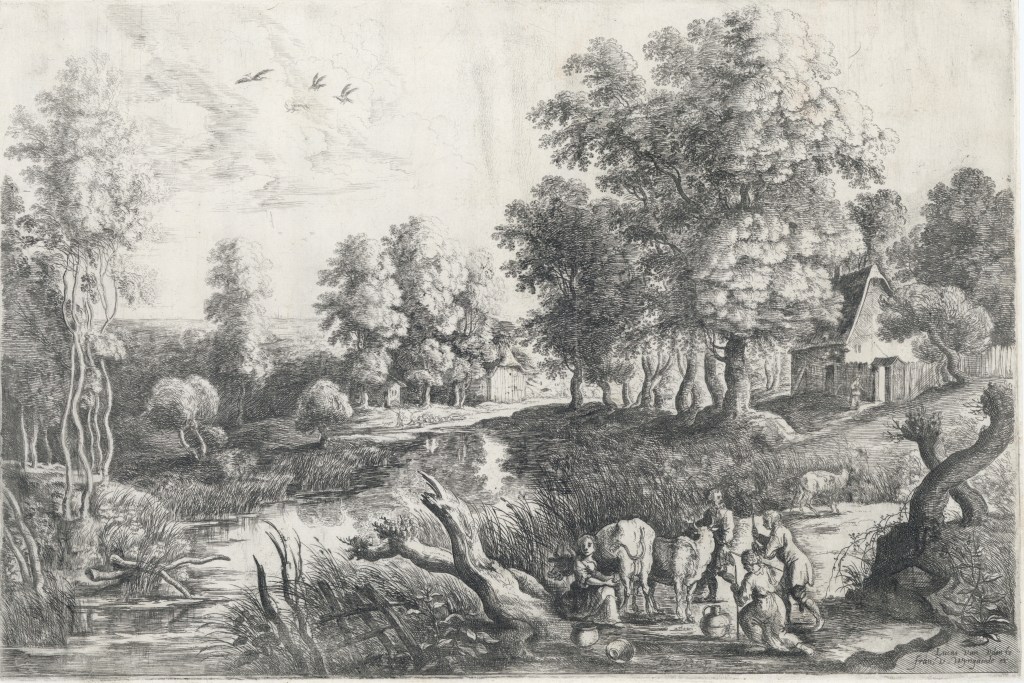
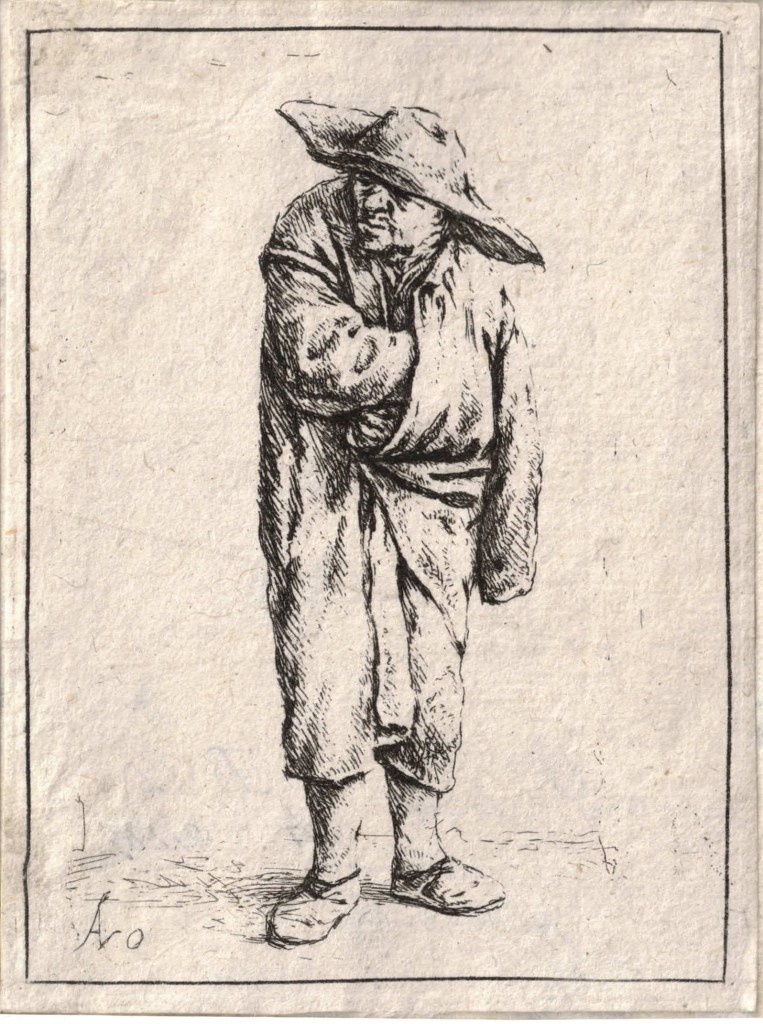
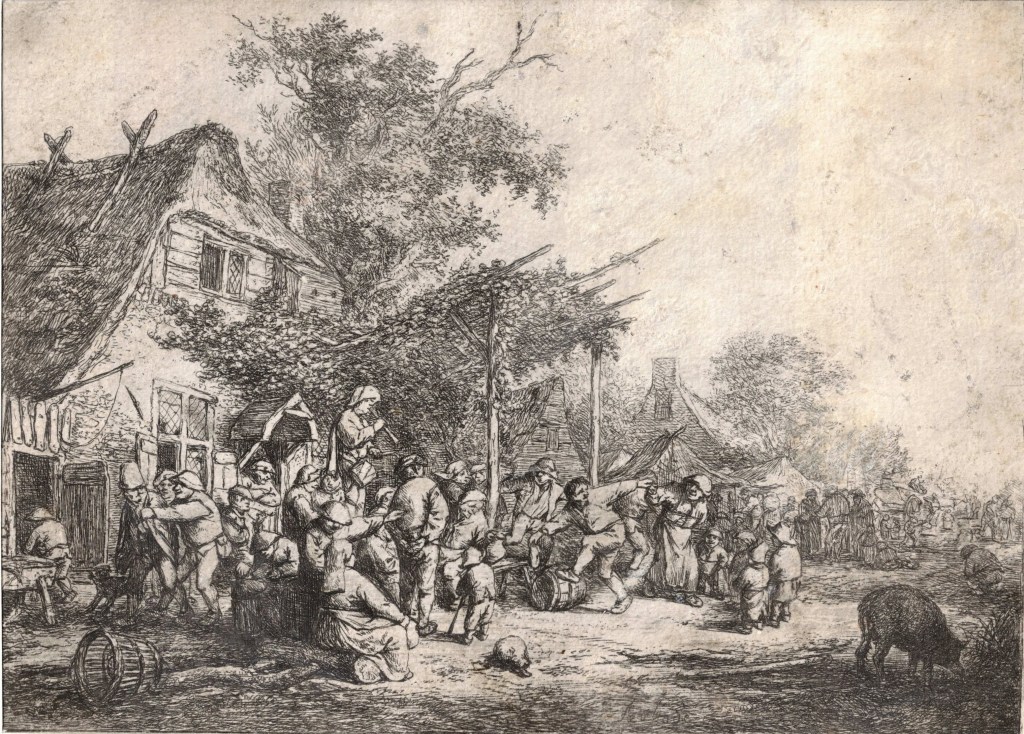
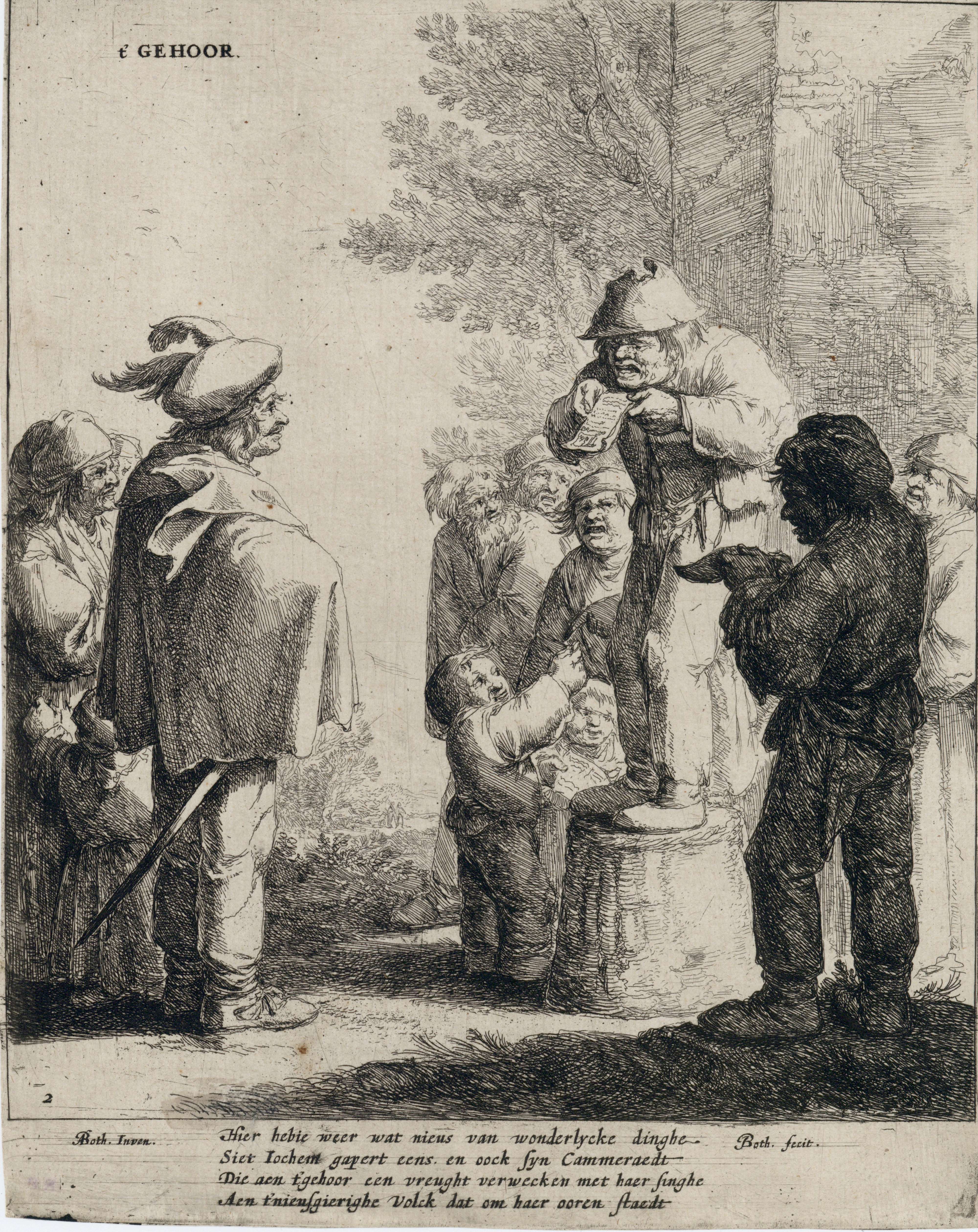
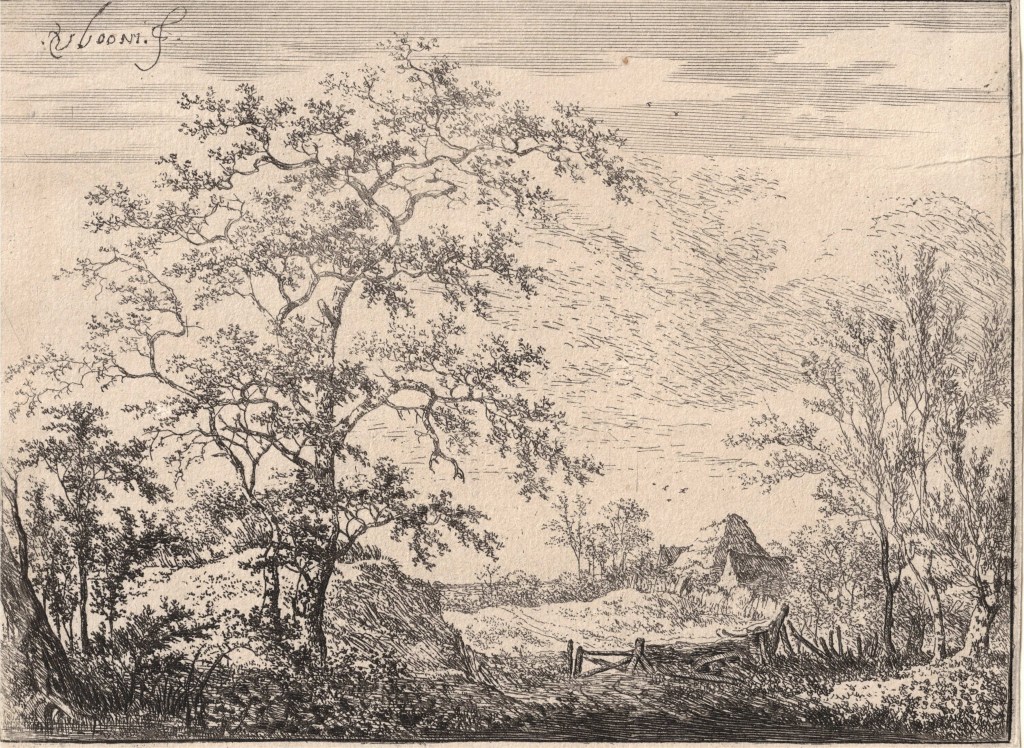
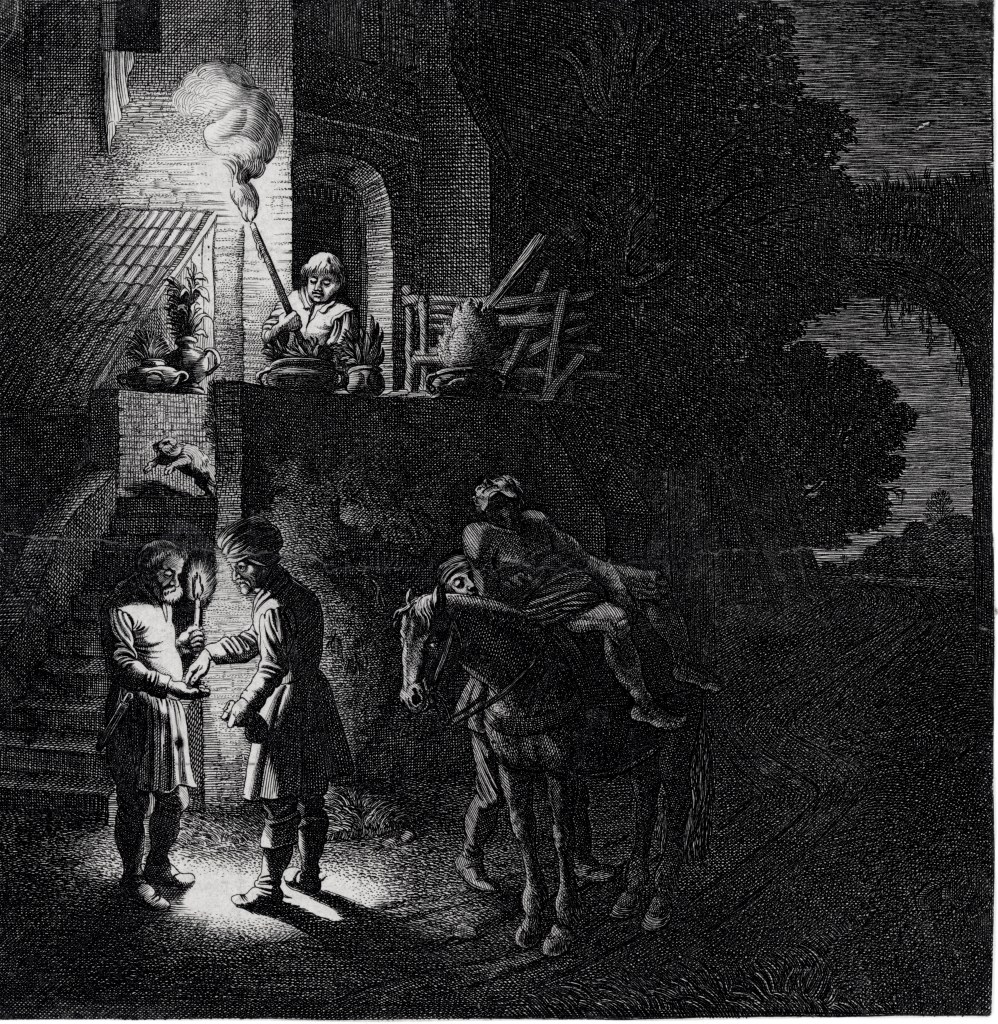
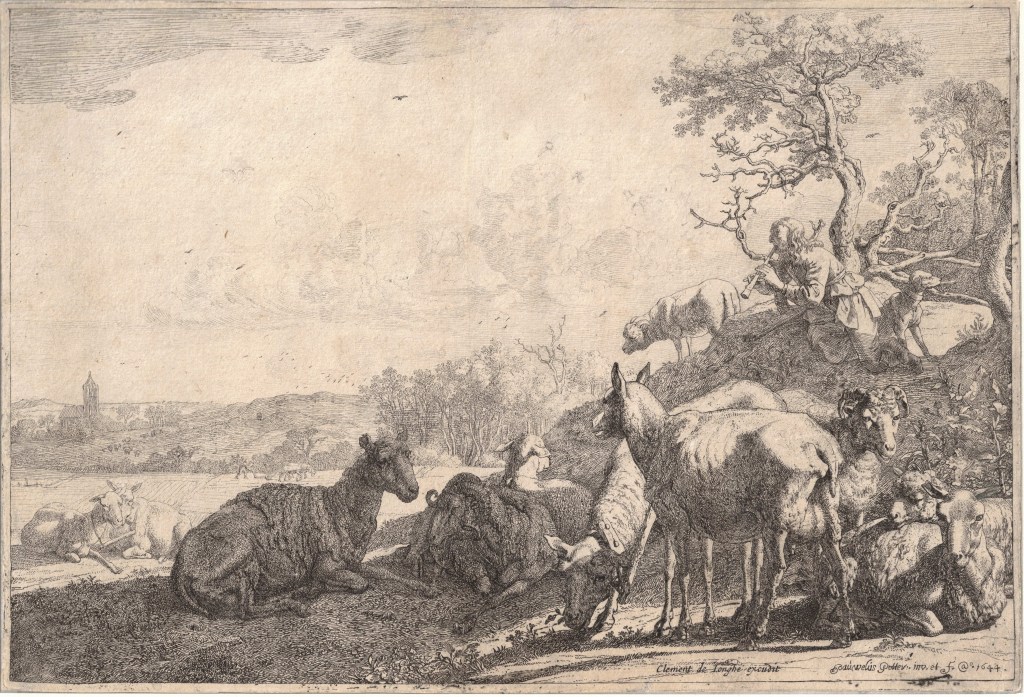
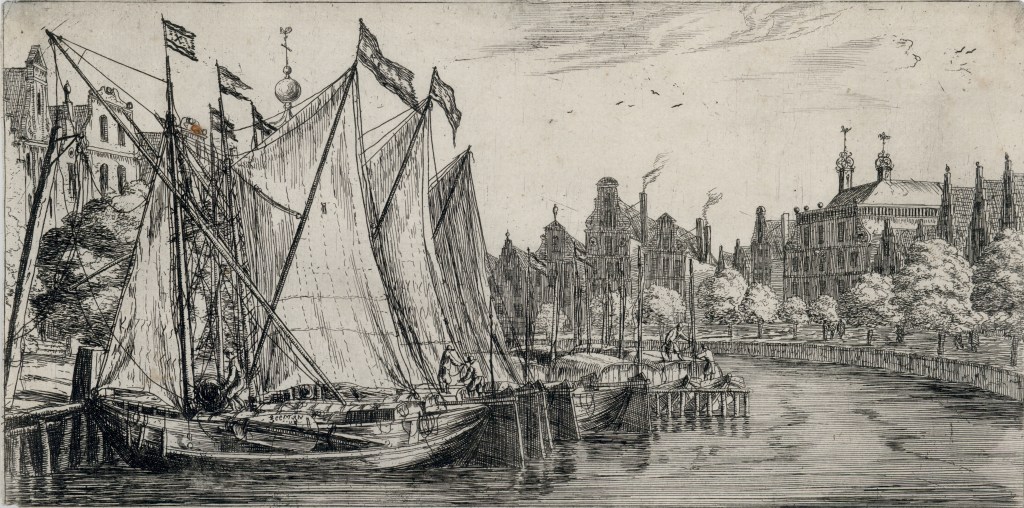
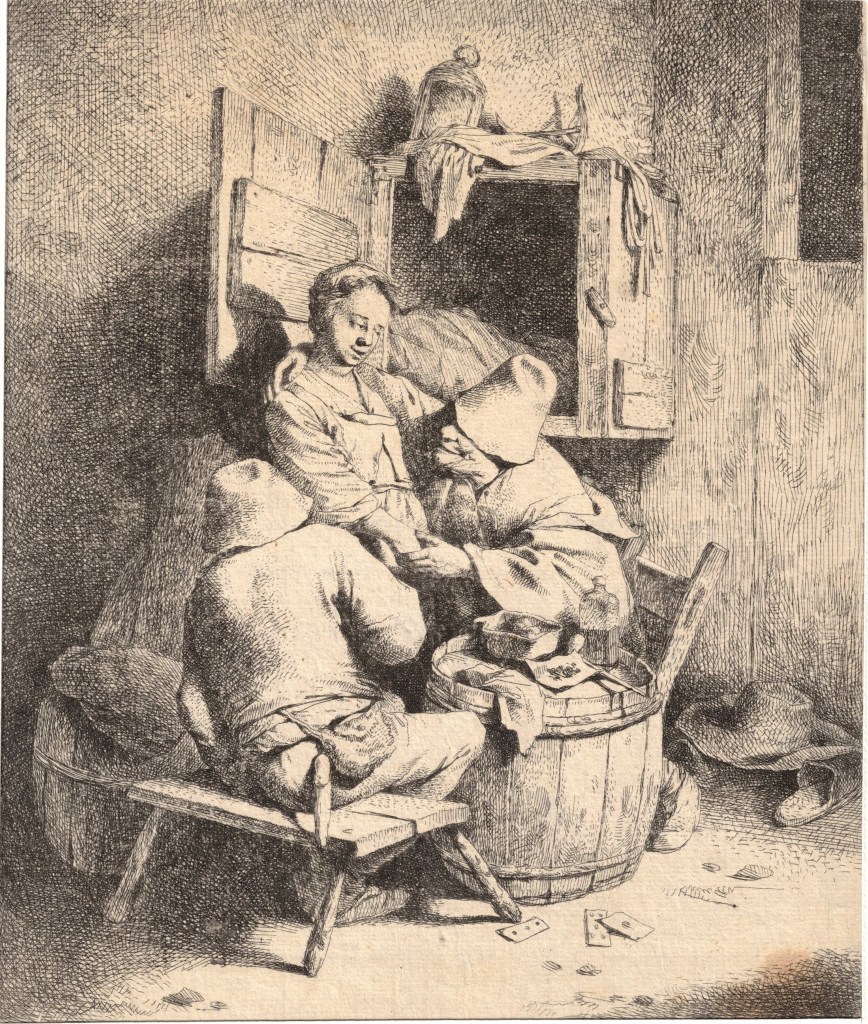
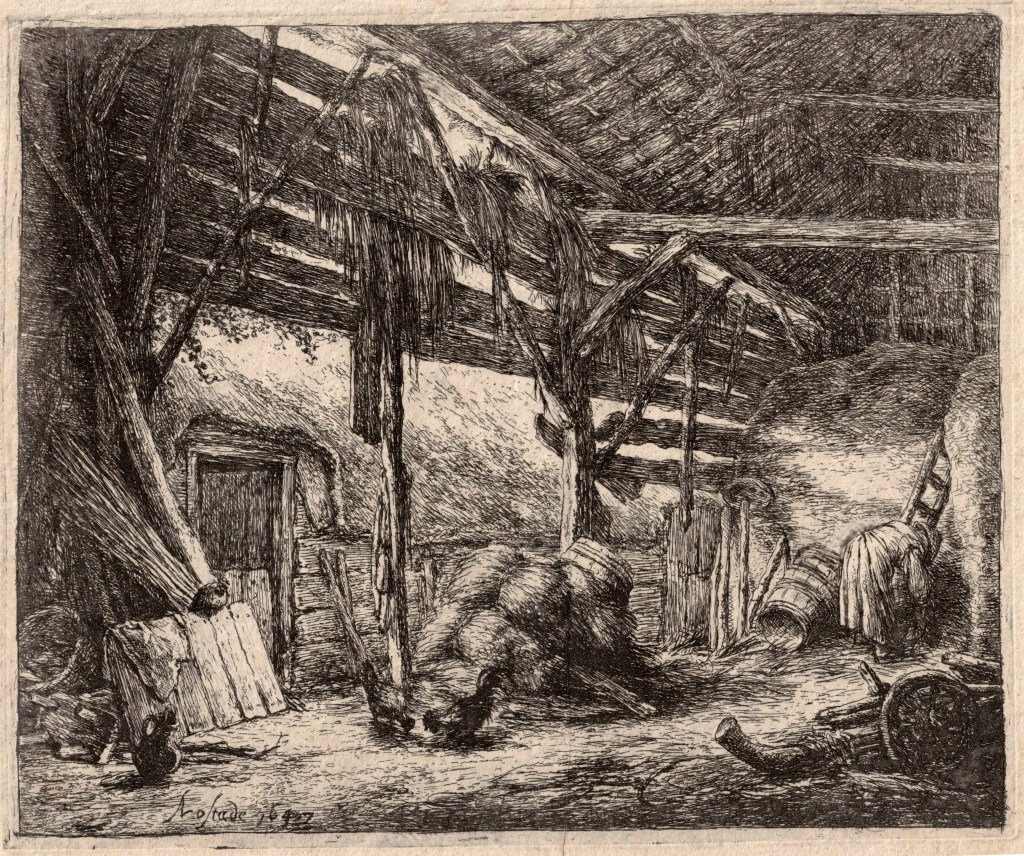
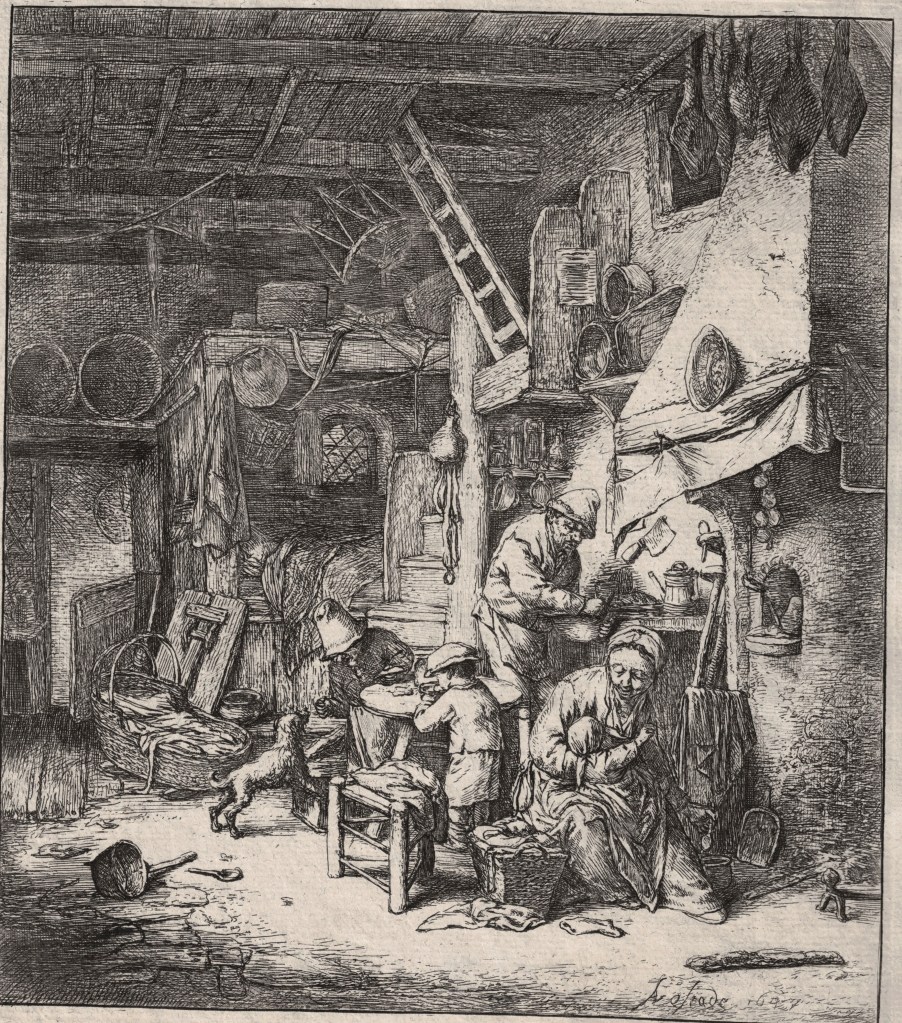
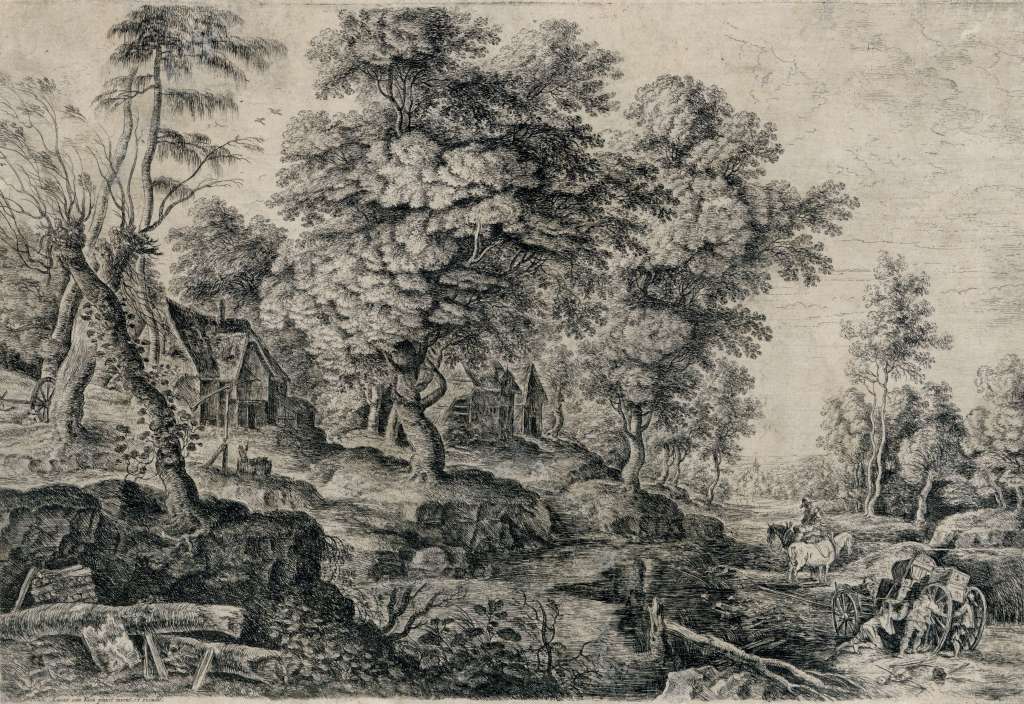
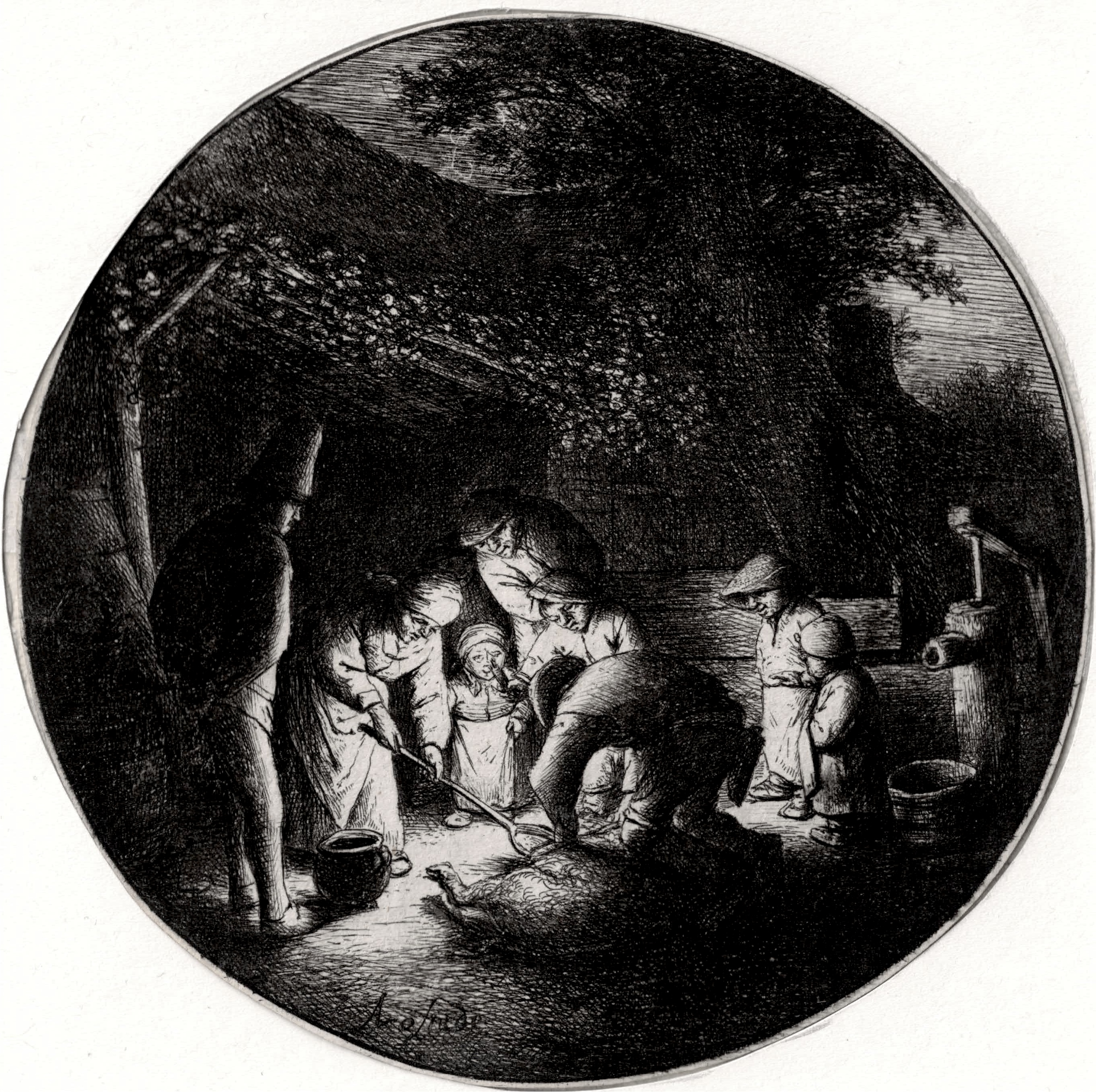
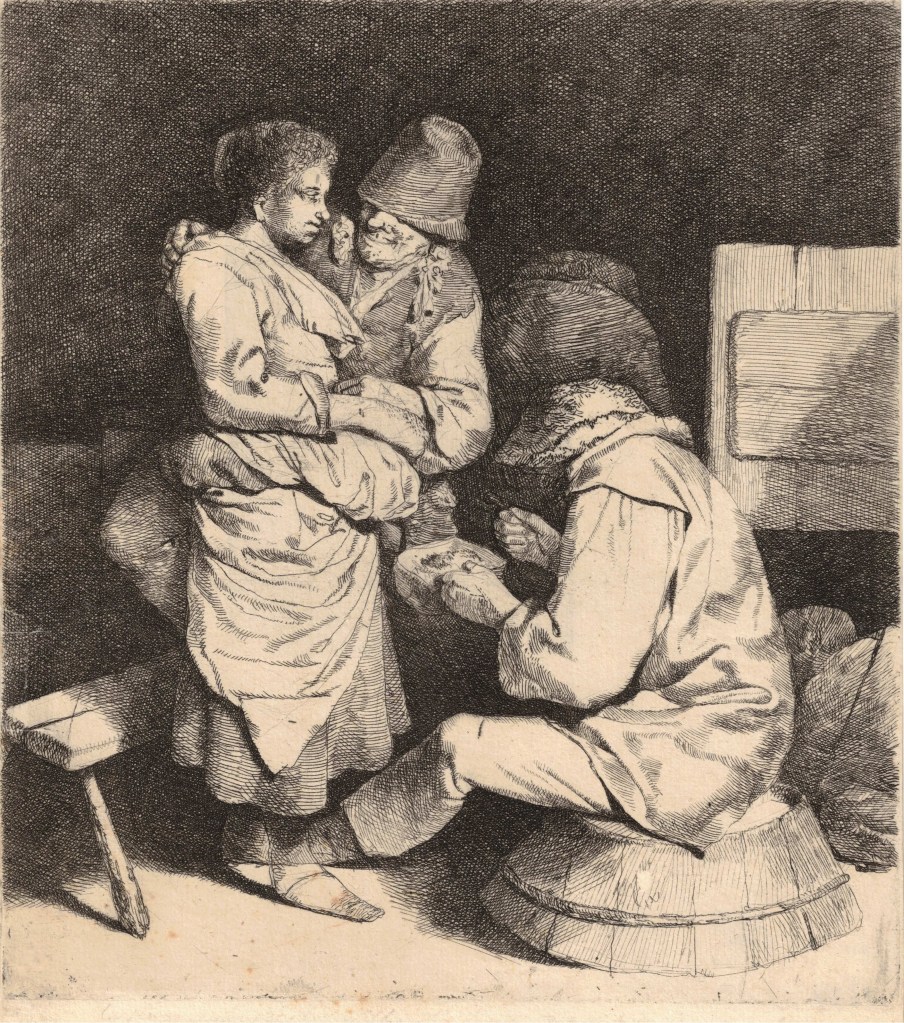
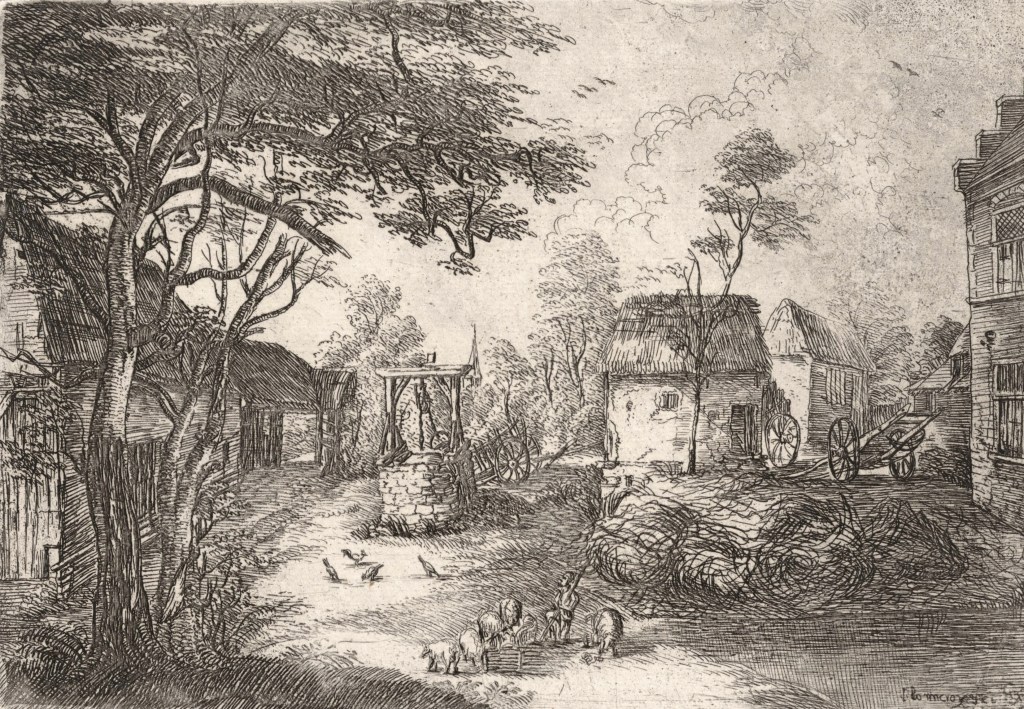
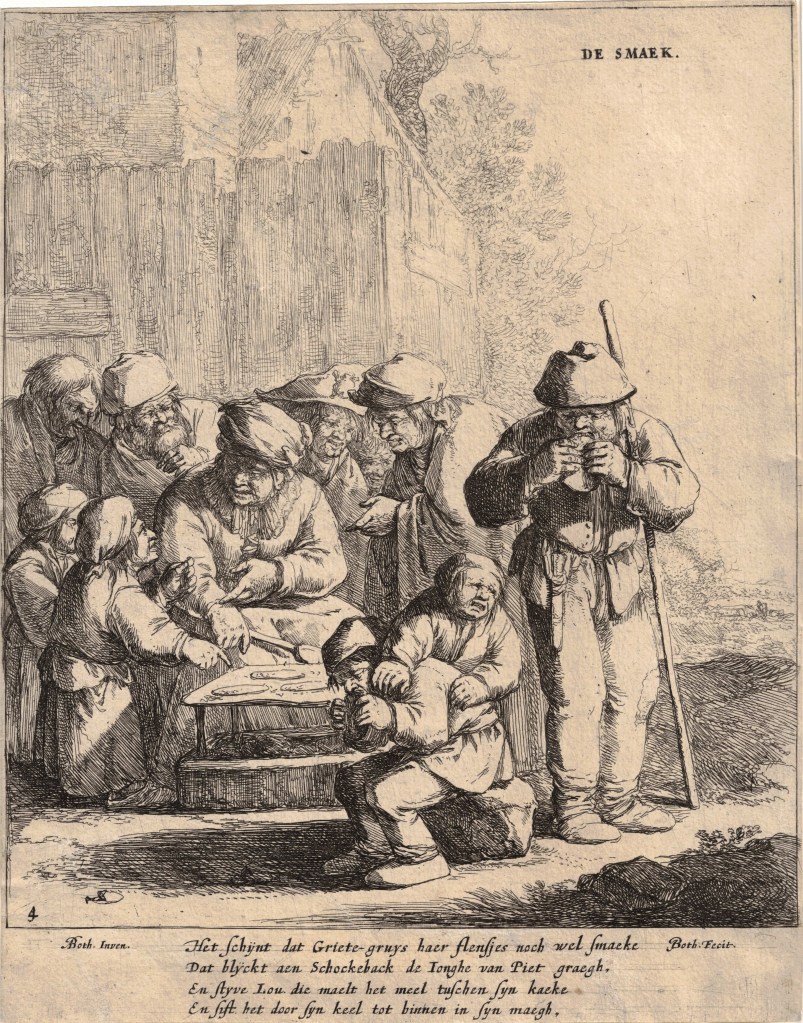
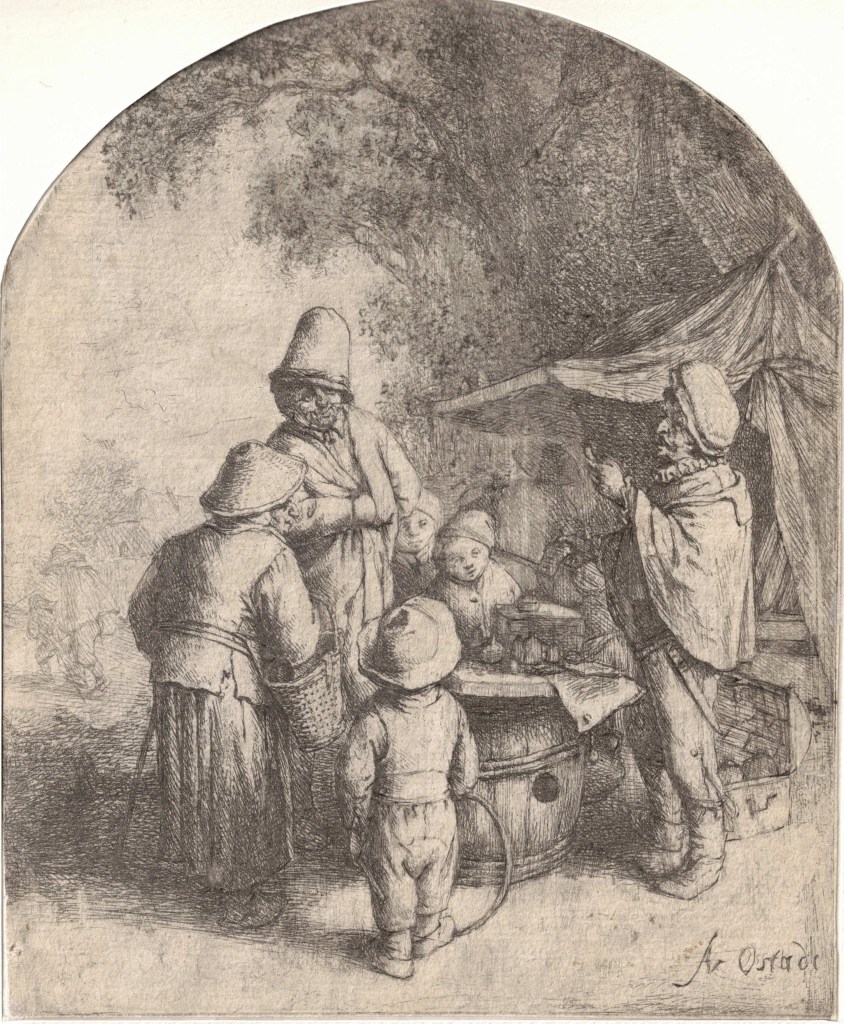
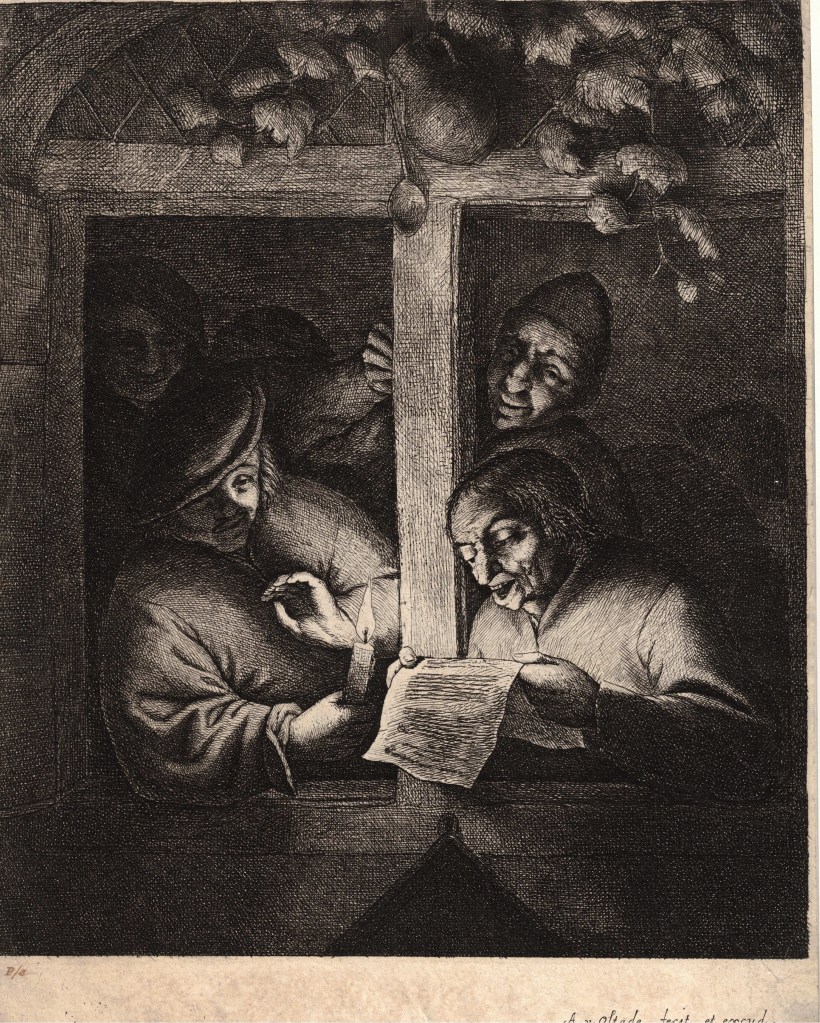
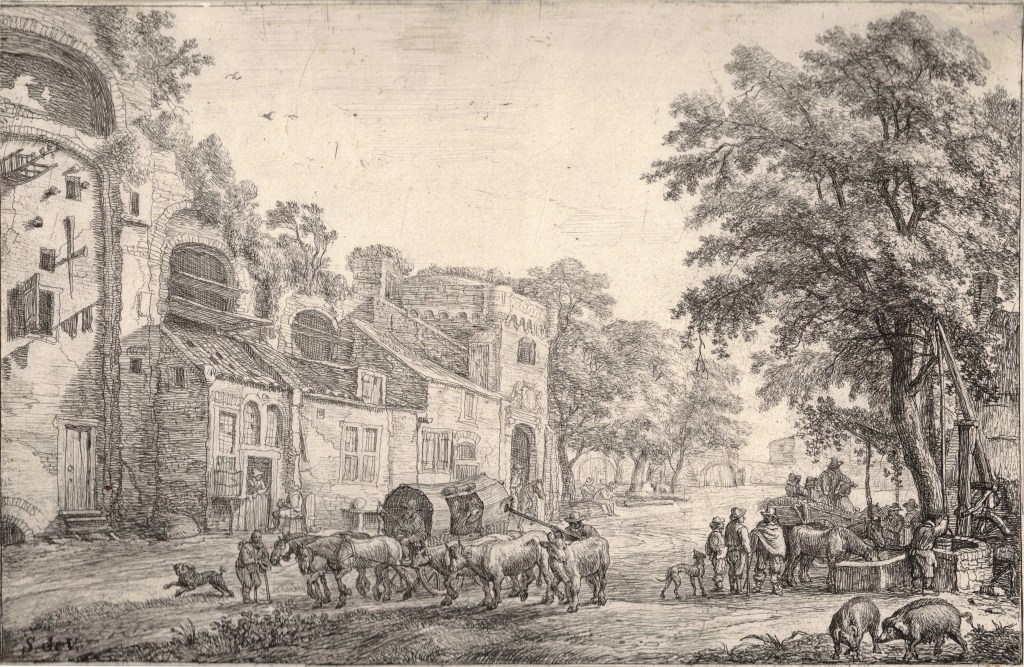
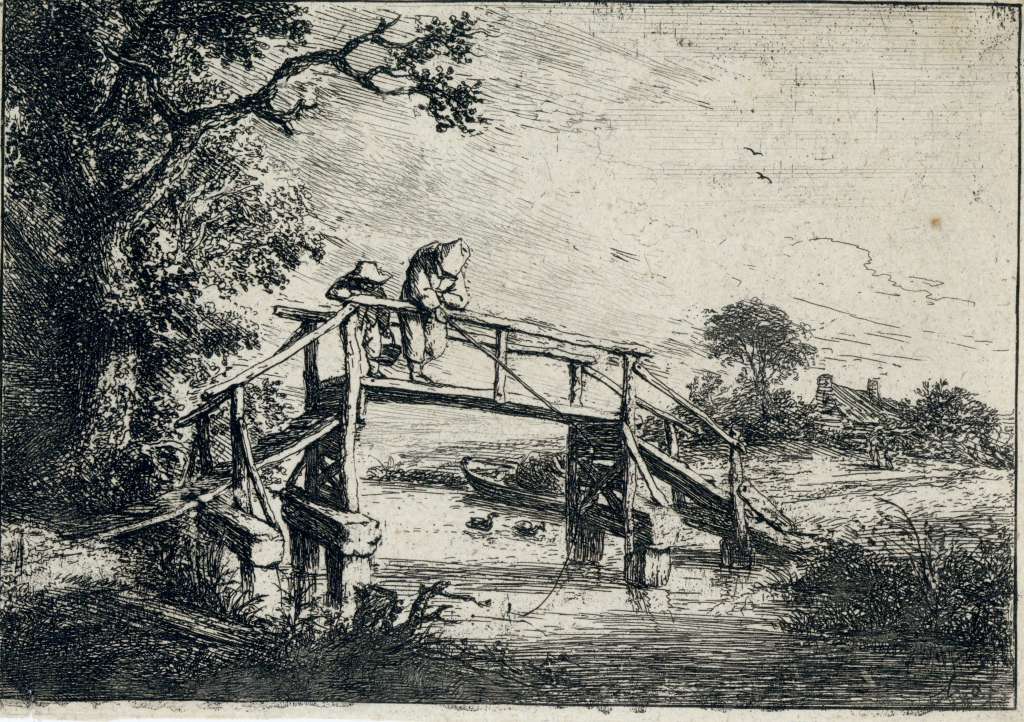
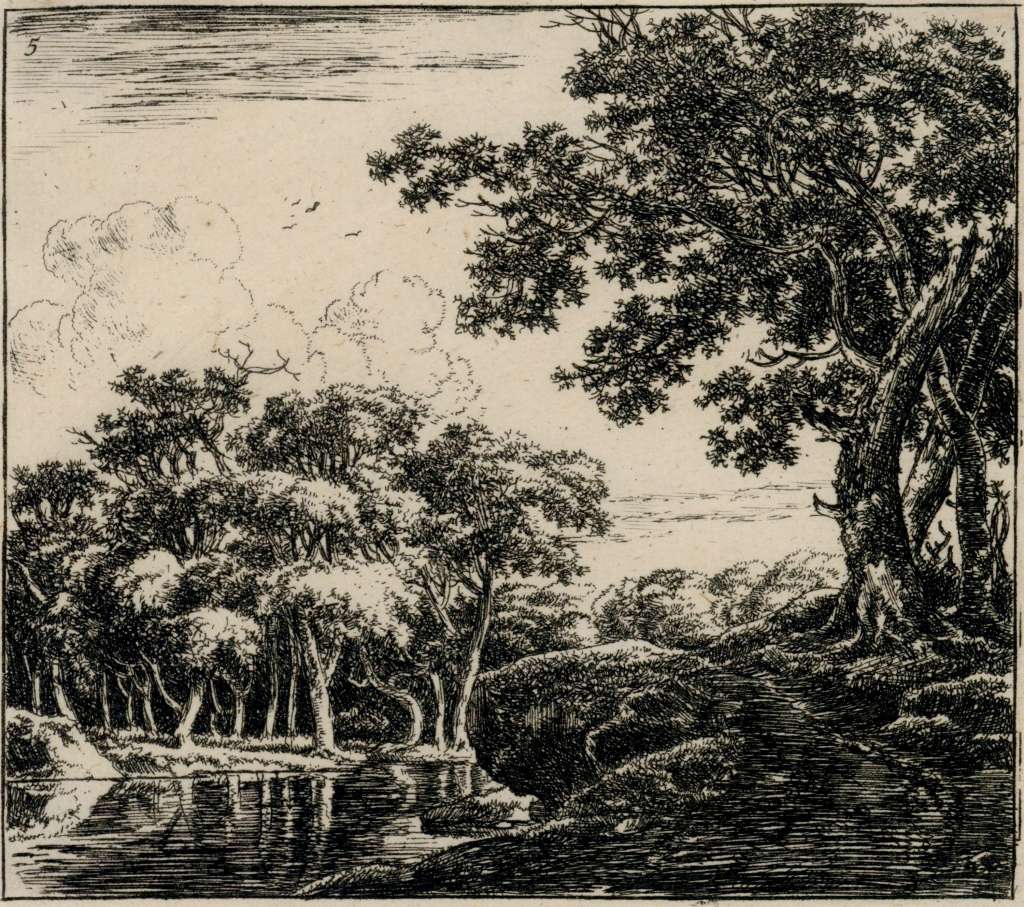
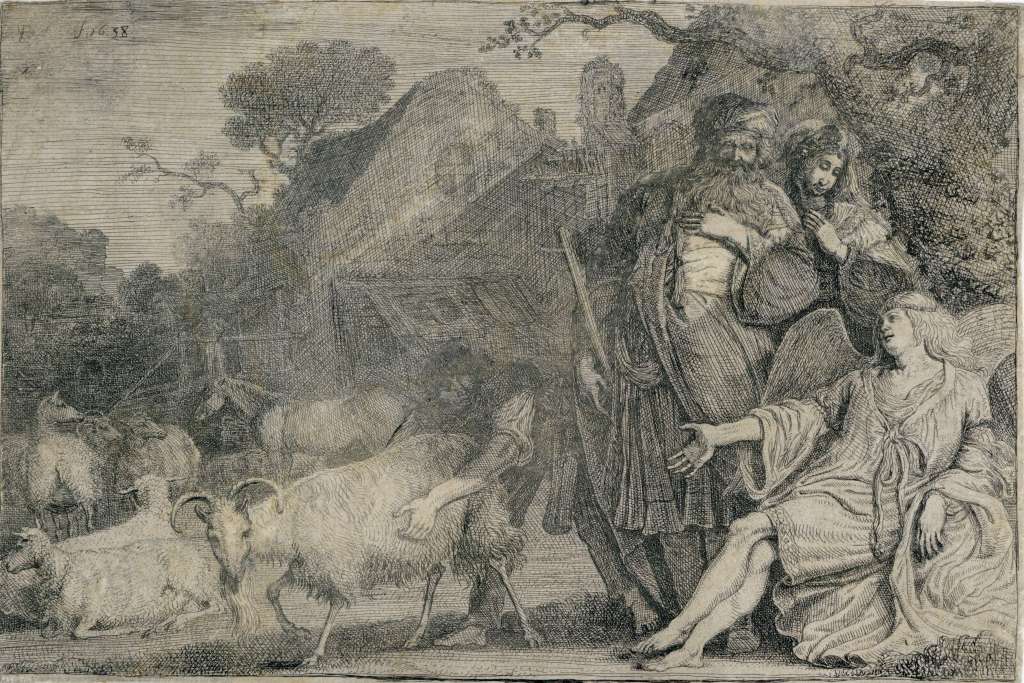
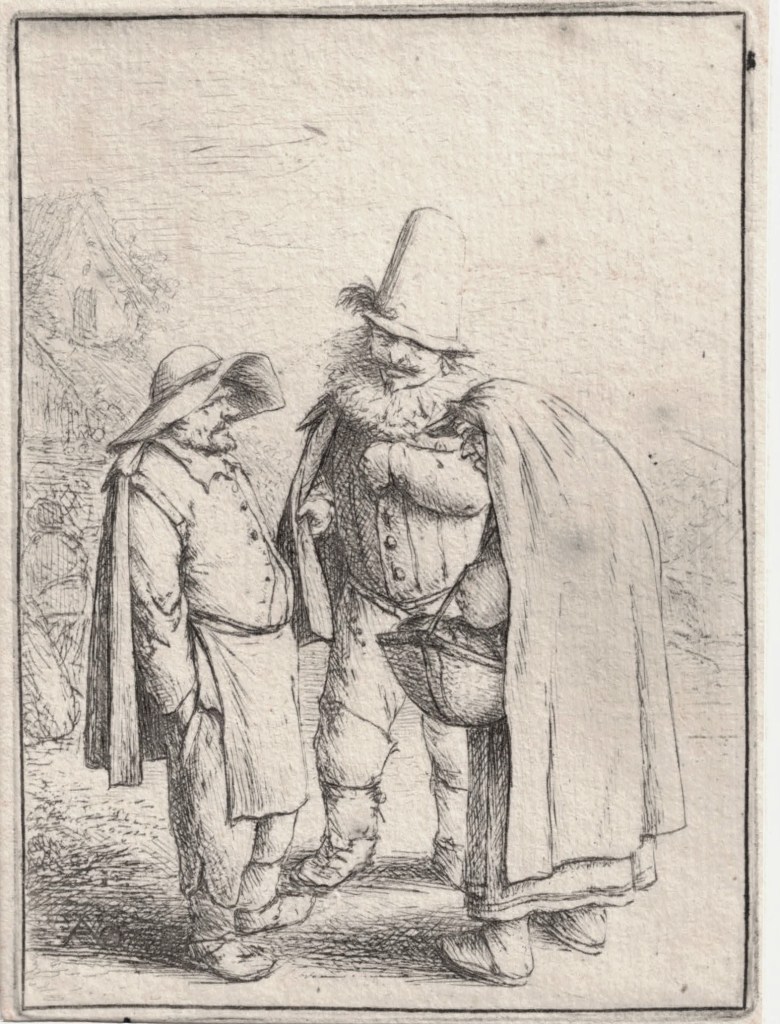
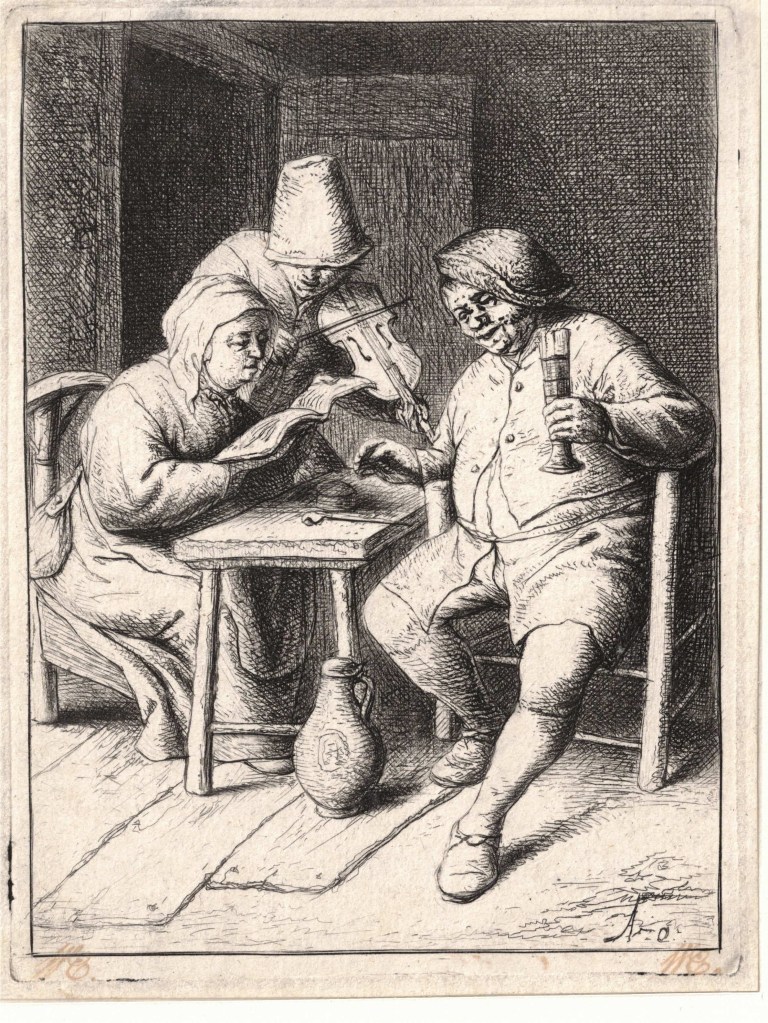
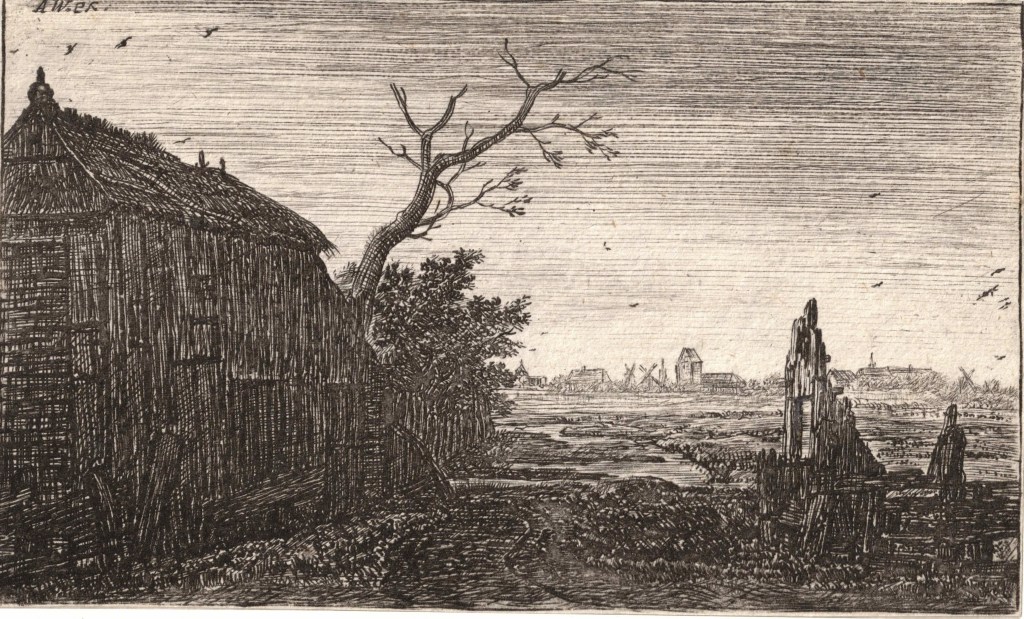
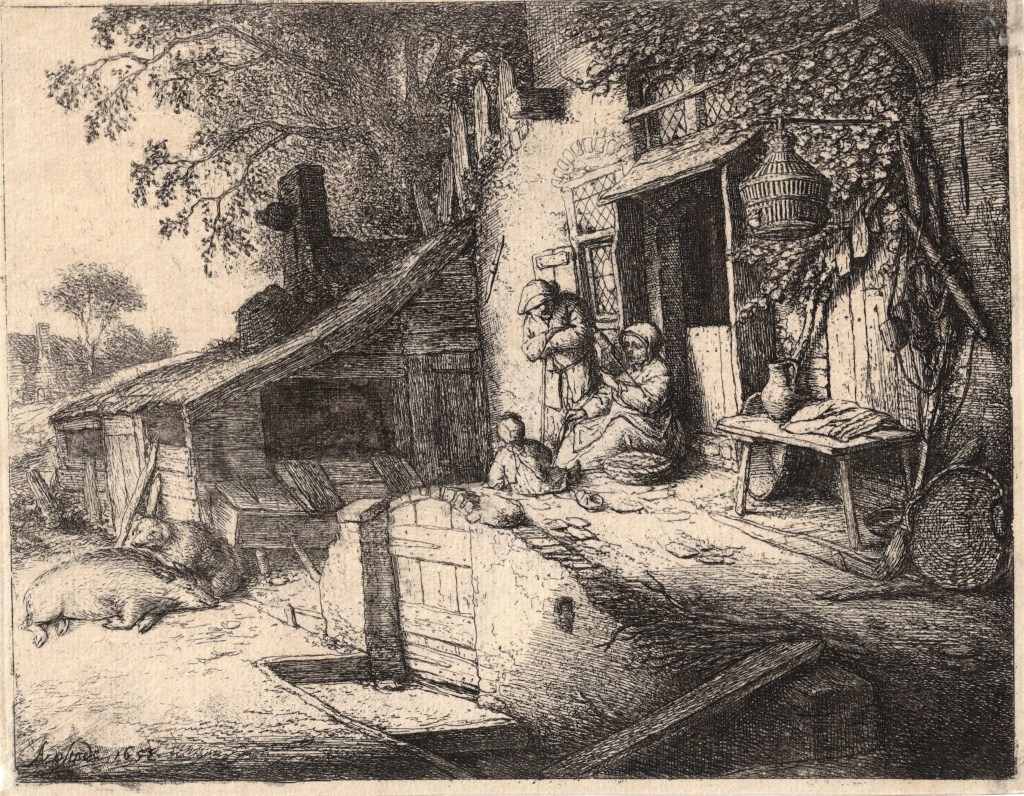
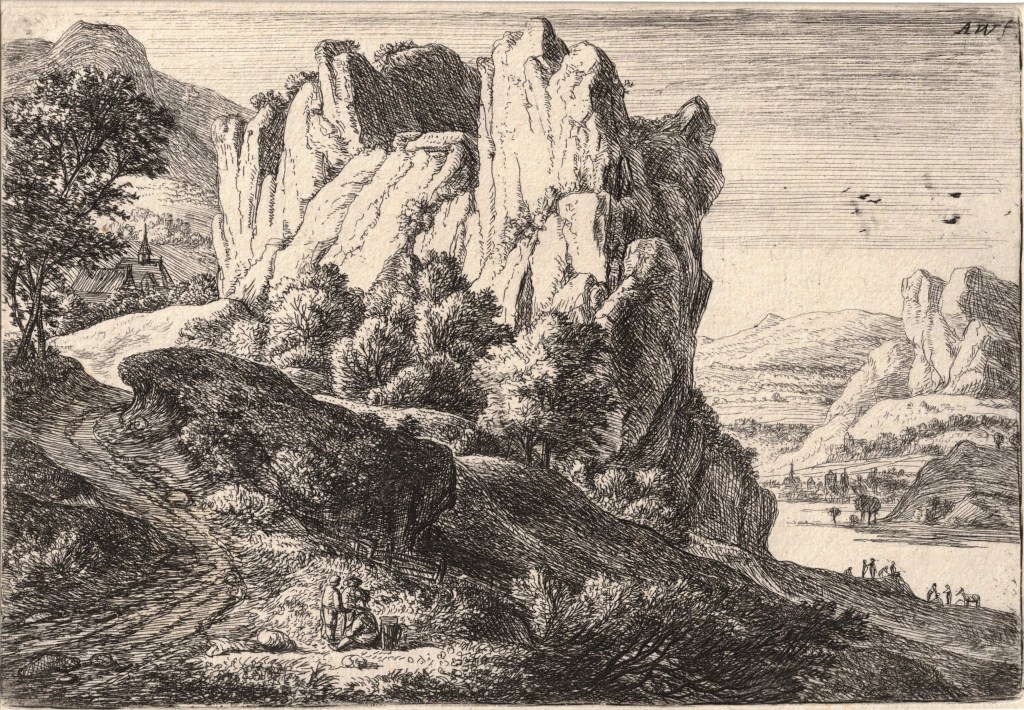
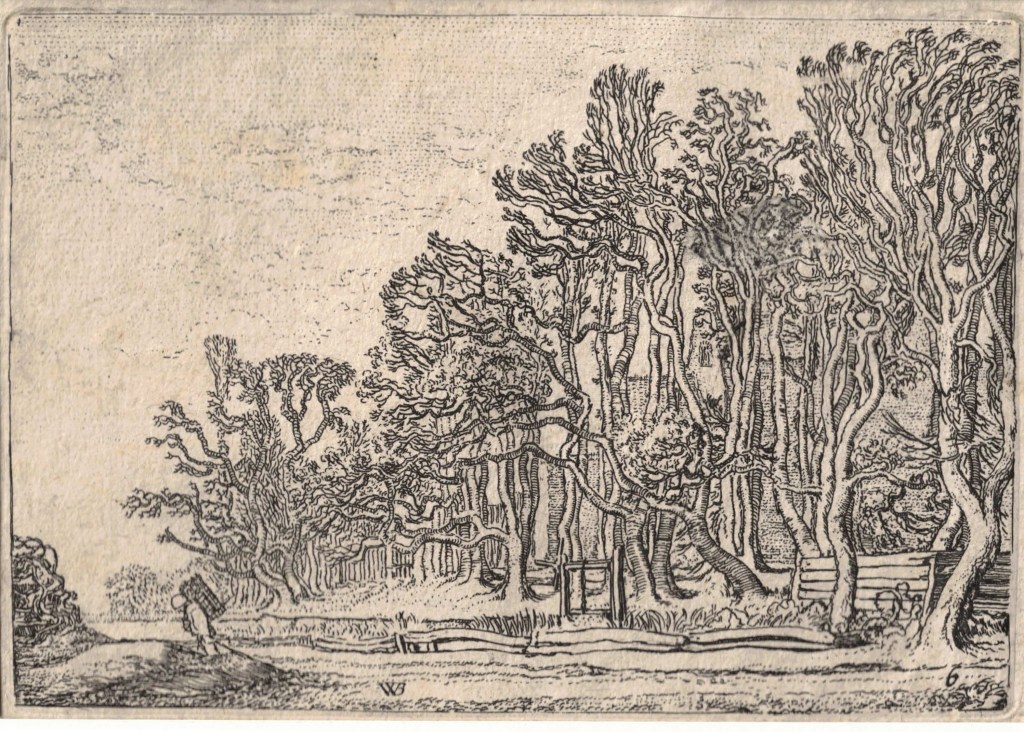
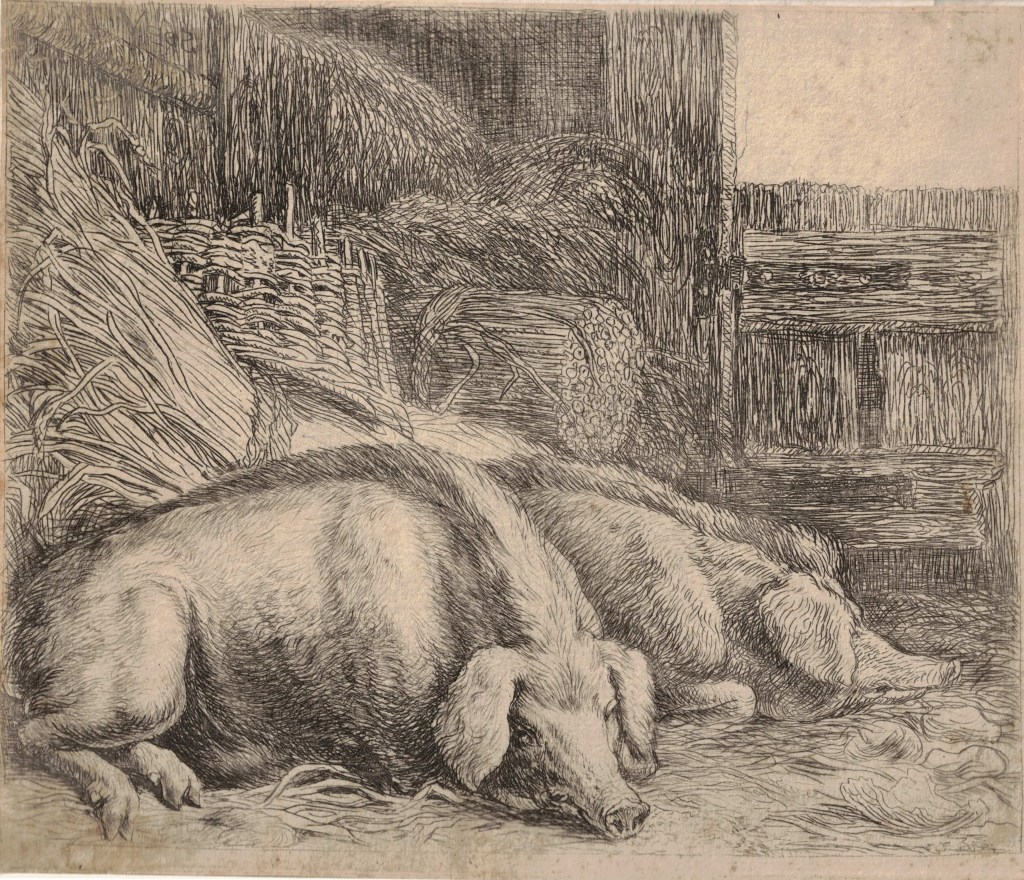
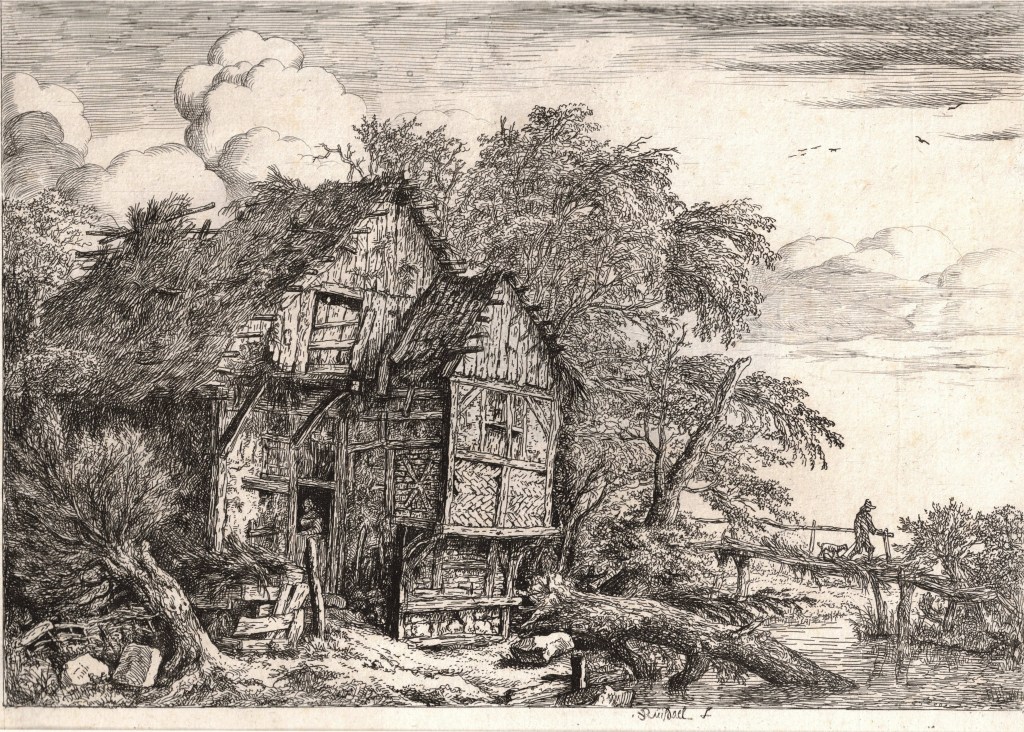
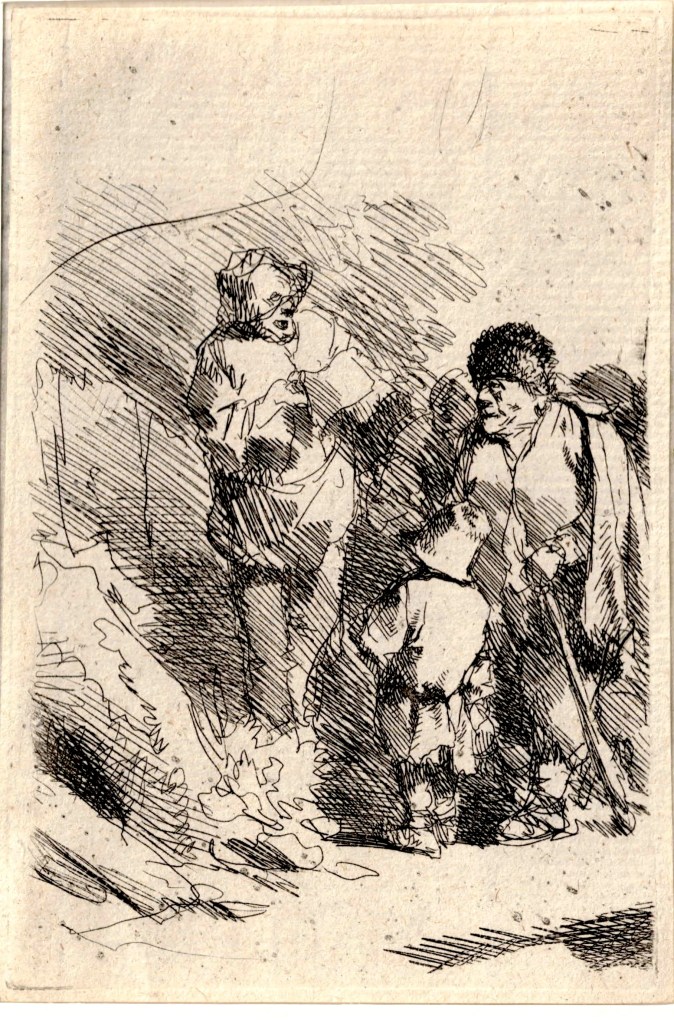
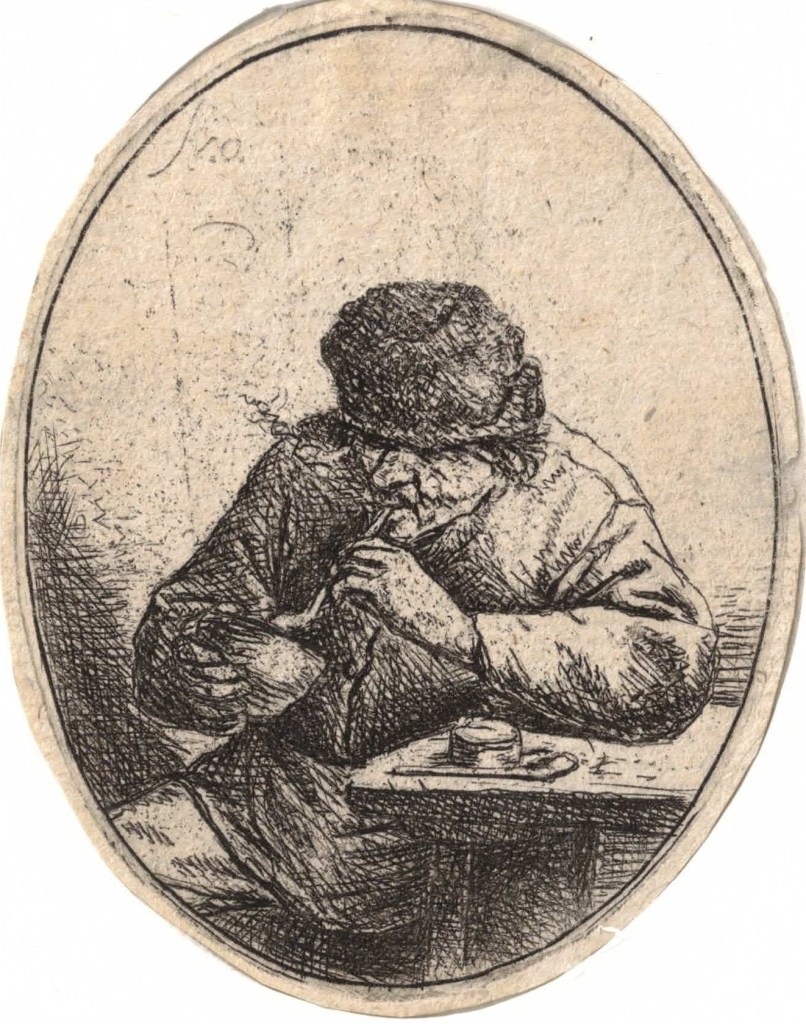
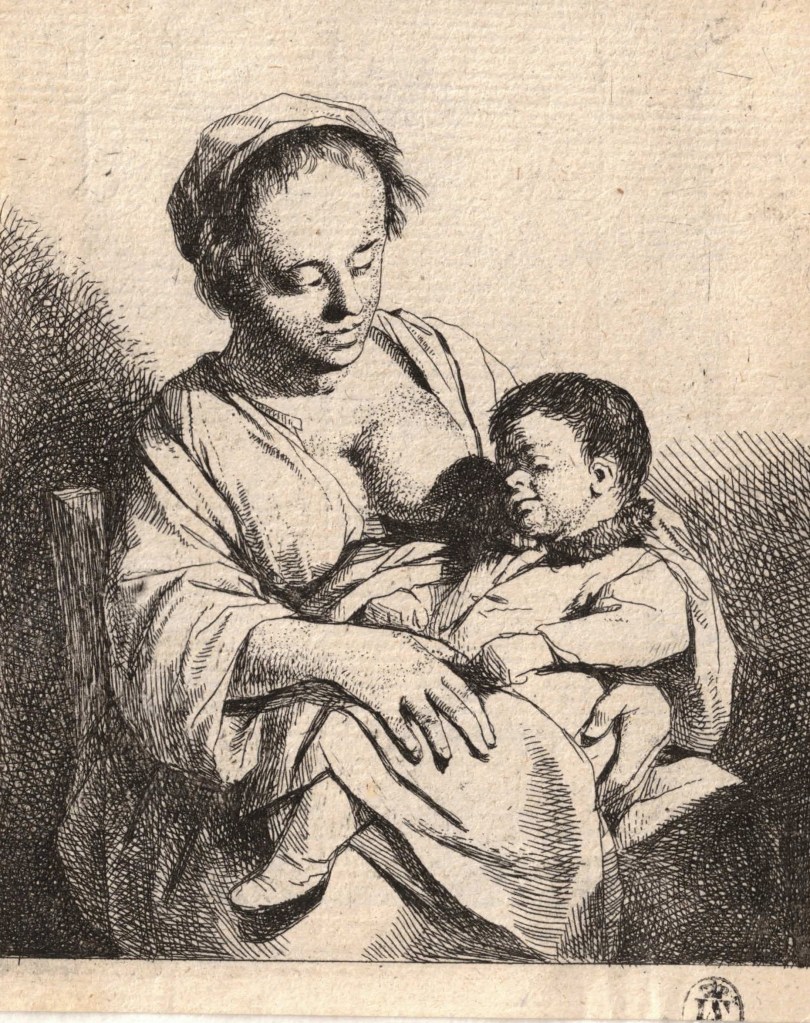
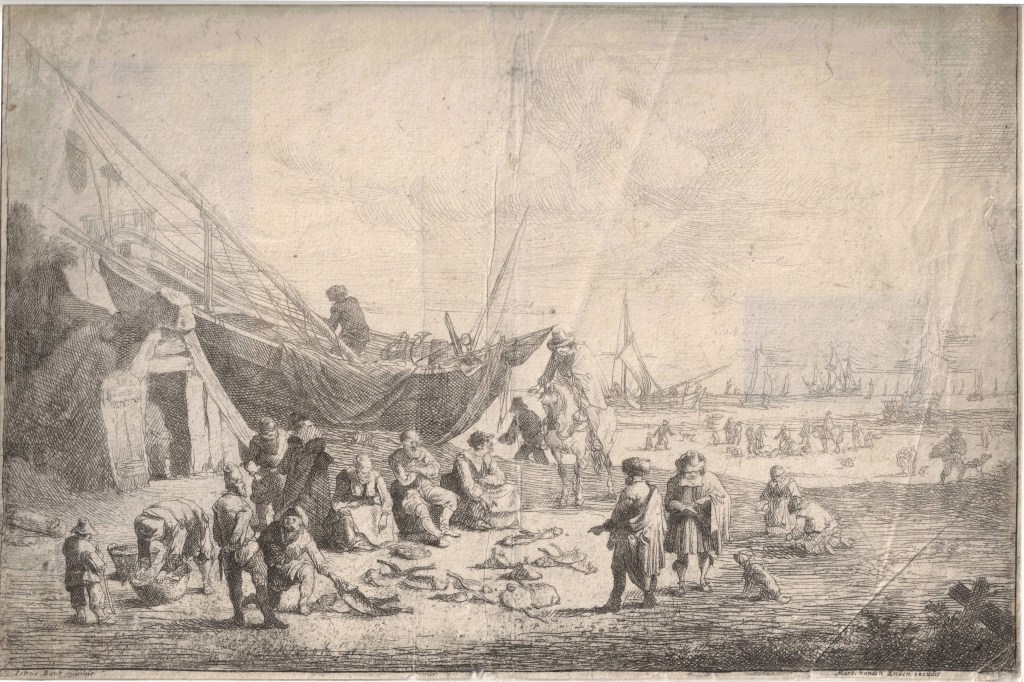
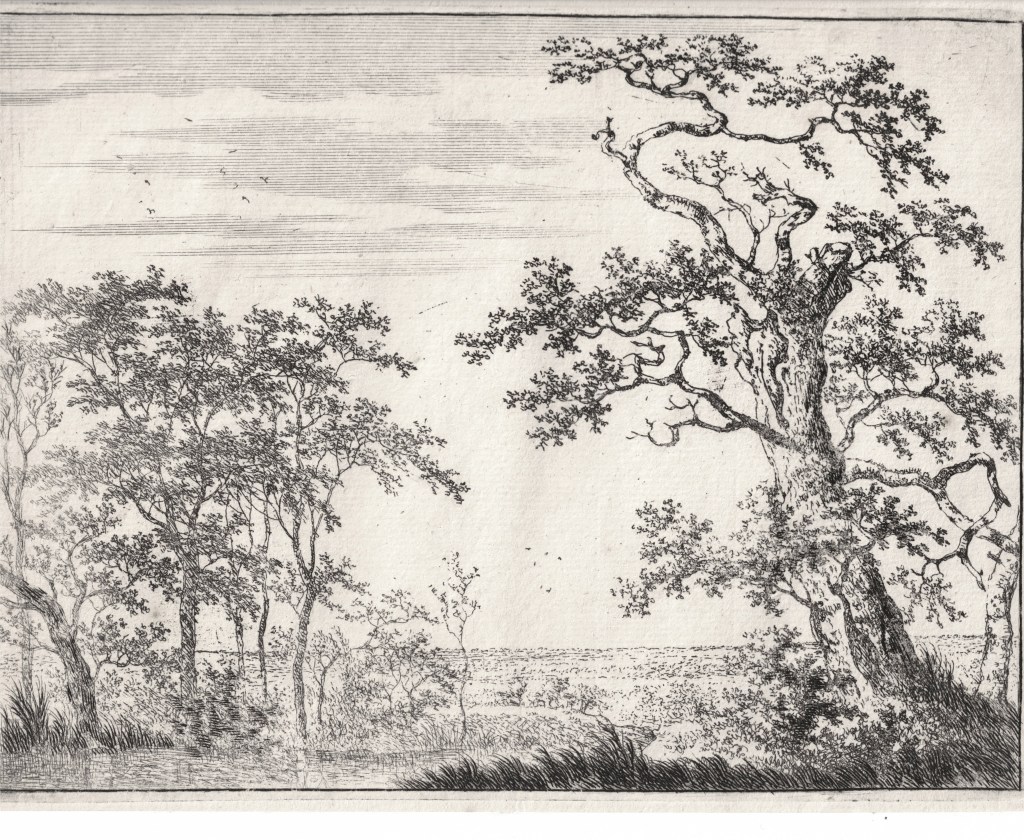
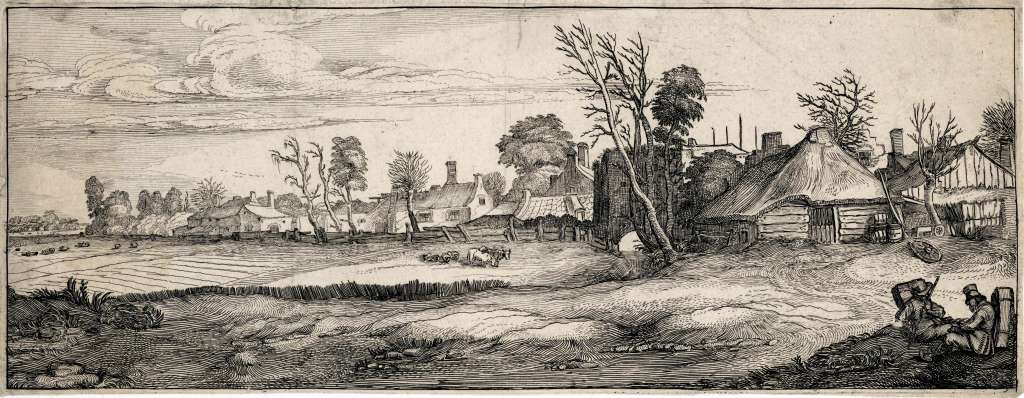
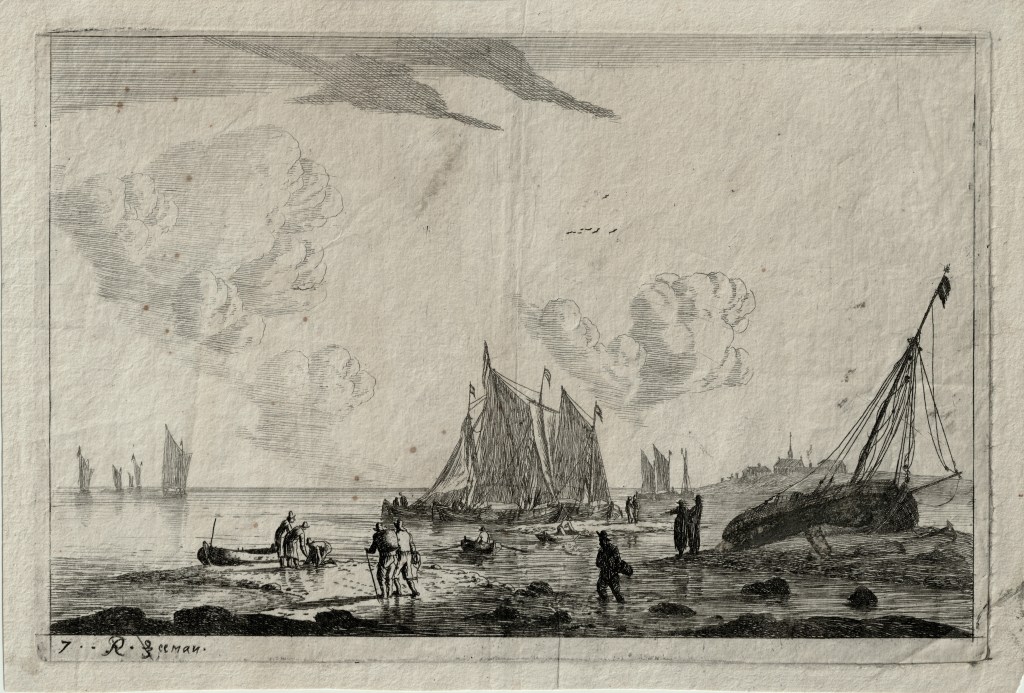
Adriaen van Ostade (1610-1685) Peasant Leaning on the Doorstep, 1653 (Godefroy 9 ii/iv)Adriaen van Ostade (1610-1685) The Smokers, c. 1650 (Hollstein 13)Aert van Waes (1620-1675) The Smoker, c. 1645 (Holl. 4 i/iii)Cornelis Bega (c. 1630-1664) Gathering by the Fireplace, 1642-1664 (Hollstein 23 i/ii)Pieter Bout (1658-1719) Skaters on the Ice, c. 1664-79Gerrit Bleker (1592-1656) The Herd at the Water Place, c. 1638 (Hollstein 7)Pieter Bout (1658-1719) The Landing Stage, c. 1664-74 (Hollstein Dutch 5 ii/ii)Lucas van Uden (1595-1672) (after Rubens), Landscape with a Stream and Two Farms, c. 1605 (Hollstein 44 ii/iv)Adriaen van Ostade (1610-1685) Peasant with Hand in Coat, 1638 (Hollstein 22 iv/vii)Adriaen van Ostade (1610-1685) Dance under the Arbour, 1652 (Hollstein Dutch 47 v/vii)Jan Both (after Andries Both) (1618-1652) Hearing, c. 1638 (Hollstein 12, ii/iv)Adriaen Verboom (1627-1673) The Hamlet, c. 1640-50 (Bartsch 1 ii/ii)Jan II van de Velde (1593-1641) The Good Samaritan paying the Innkeeper, 1615-1641 (Hollstein 12)Paul Potter (1625-1654) Le Berger, 1644 (Hollstein 15 iii/v)Reinier Nooms(called Zeeman) (1623-1667) The Ferry to Leiden, 1659-1662 (Hollstein 19)Cornelis Bega (c. 1630-1664) A Young Hostess and Two Men, c. 1642-1664 (Holl. 34 i-ii/ii)Adriaen van Ostade (1610-1685) The Barn, 1647 (Hollstein 23 v/x)Adriaen van Ostade (1610-1685) The Laughing Peasant, 1653 (New Hollstein 43 vi/viii)Adriaen van Ostade (1610-1685) The Family, 1647 (Hollstein 46, v/vii)Lucas van Uden (1595-1672) Landscape with Men Pushing an Unharnessed Cart, c. 1660 (Holl. Dutch 41 i/iii)Adriaen van Ostade (1610-1685) Peasants Slaughtering a Pig, 1642 (H. Dutch 41 vi/viii)Cornelis Bega (c. 1630-1664) Three Peasants and a Young Hostess in an Inn, 1642-1664 (Hollstein 33 ii/v)Jan-Baptiste Bonnecroy (1618-1676) Le Retour du fils prodigue (après 1632) Hollstein Dutch 1 état uniqueJan Both (after Andries Both) (1618-1652) Taste, c. 1638 (Hollstein 14, ii/iv)Adriaen van Ostade (1610-1685) The Charlatan, 1648 (Hollstein Dutch 43 ii/ix)Adrian van Ostade (1610-1685) The Haranguers, 1667 (?) (Hollstein 19 vi/vii)Simon de Vlieger (1601-1653) Arrival at the Village, c. 1640 (Hollstein 9 ii/ii)Adriaen van Ostade (1610-1685) The Anglers, c. 1653 (Godefroy 26 vi/vii)Herman Naiwincx (1623-1651) Landscape, c. 1650 (Hollstein 5 iii/iii)Gerrit Bleker (1592-1656) The Angel Promises a Son to Abraham, 1638 (Holl. Dutch 1 i/iv)Adriaen van Ostade (1610-1685) Three Grotesque Figures, 1638 (New Hollstein 19 v/viii)Adriaen van Ostade (1610-1685) The Concert, 1644 (Hollstein 30 vii/xi)Jan Ruijscher (1625-1675) The Sluice, 1640-1670 (Holl. Dutch 11 ii/ii)Adriaen van Ostade (1610-1685) The Spinner, 1652 (Hollstein Dutch 31 iv/vii)Anthonie Waterloo (1609-1690) The Bare Rock, c. 1640-1690 (Holl. Dutch 73)Willem Pietersz. Buytewech (1591-1624) The Two‑Plank Fence, 1621 (Holl. 40)Simon de Vlieger (1601-1653) Two Pigs, c. 1640-1650 (Hollstein 16 only state)Jacob van Ruisdael (1628-1682) The Small Bridge, 1652 (New Hollstein 1 ii/ii)Cornelis Bega (1630-1664) The Singer, 1642-1664 (Holl. 27)Adriaen van Ostade(1610-1685) The Smoker, 1640 (Hollstein Dutch 5 vi/vii)Cornelis Bega (1630-1664) The Mother, c. 1655 (Holl. 28 i/ii)Pieter Bout (1658-1719) Fish Market on Scheveningen Beach (Hollstein Dutch 1 ii/ii)Adriaen Verboom (1627-1673) The Pond, c. 1640-50 (Bartsch 2 ii/ii)Jan II van de Velde (1593-1641) View of a Village Surrounded by Meadows, 1615 (Hollstein 188, i/ii) (Amoenissimae aliquot Regiunculae), 1615 Renier Nooms (Zeeman) (1623-1664) View of a Beach (Some River Ports No. 7), c. 1656 (H. 110 i/ii)


 Homepage